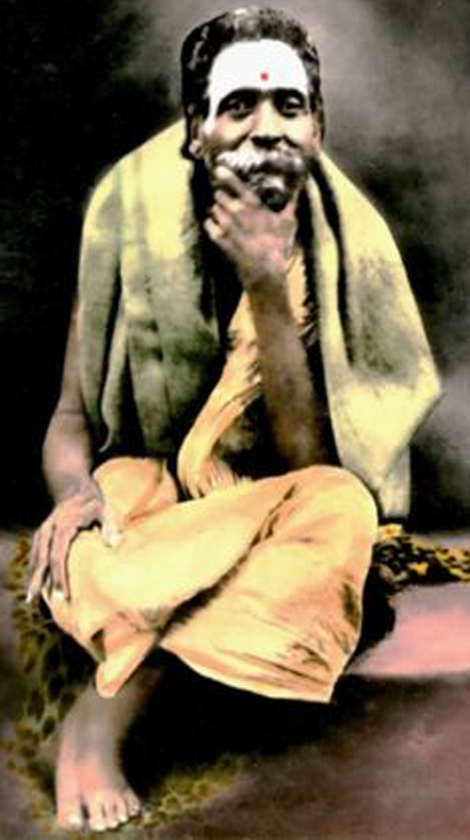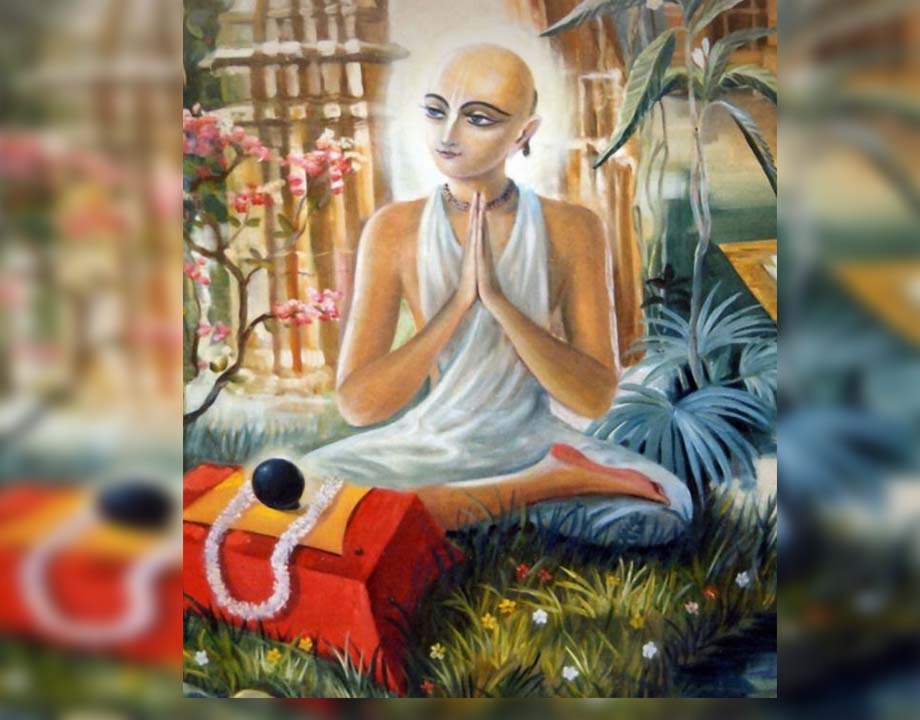
Tulsidas was born on Saptami, the seventh day of Shukla Paksha, the bright half of the lunar Hindu calendar month Shraavana, which correlates with 1 August 1511 of the Gregorian calendar. His birthplace is identified as Sookar Kshetra Soron, District Kasganj in Uttar Pradesh. Tulsidas was born to Hulsi and Atmaram Dubey, and most sources identify him as a Sanadhya Brahmin of the Bharadwaj Gotra, although some sources claim he was a Kanyakubja or Saryupareen Brahmin. In 2012, Sukarkhet Soron was declared officially by the government of Uttar Pradesh as the birthplace of Tulsidas.

Tulsidas is a Hindu poet-saint who is best known for his epic work, the Ramcharitmanas, which is a retelling of the Hindu epic Ramayana in the Awadhi language. There is some disagreement among biographers regarding the year of Tulsidas's birth, with some sources claiming that he was born in Vikram Samvat 1554 (1497 CE) and others claiming that he was born in Vikram Samvat 1568 (1511 CE). According to legend, Tulsidas was born after staying in the womb for twelve months, with all thirty-two teeth in his mouth and the ability to speak the name of Lord Rama. He was abandoned by his parents due to inauspicious astrological events and was raised by a female servant before being adopted by a Vaishnava ascetic named Narharidas. Tulsidas received his education and spiritual training under Narharidas and later wrote the Ramcharitmanas.
There are different views on whether Tulsidas was married or not. According to the Tulsi Prakash and some other works, Tulsidas got married to Ratnavali, the daughter of a Brahmin named Dinbandhu Pathak, in Vikram 1589 (1532 CE). They had a son named Tarak, who died at a young age. However, some authors consider this account to be a later addition and believe that Tulsidas was a bachelor. Rambhadracharya is among those who believe that Tulsidas never married and was a Sadhu from childhood.
One incident that is often associated with Tulsidas' renunciation of the householder's life involves his wife Ratnavali. According to the story, when Tulsidas learned that Ratnavali had left for her father's home, he crossed the Yamuna river at night to meet her. Ratnavali chastised Tulsidas for his attachment to her physical body and suggested that he should redirect his devotion towards God instead. Following this conversation, Tulsidas renounced his householder's life and became a Sadhu.
After renouncing the worldly life, Tulsidas spent much of his time traveling to various holy places and meeting saints and Sadhus. He visited Varanasi, Prayag, Ayodhya, and Chitrakuta, among other places, and traveled as far as Badrinath, Dwarka, Puri, and Rameshwaram. He also journeyed to the Himalayas and even visited the Manasarovar lake in Tibet, where he is said to have had a Darshan of Kakabhushundi, one of the four narrators in the Ramcharitmanas.
According to the account of Priyadas, Tulsidas had a desire to see Rama with his own eyes. One day, on his way back to Varanasi from the woods, he offered water to a thirsty Preta and was granted a boon. He asked to see Rama, but the Preta told him that it was beyond his power. However, the Preta said that he could guide Tulsidas to Hanuman, who could grant the boon. The Preta told Tulsidas that Hanuman came disguised as a leper to listen to his Katha every day in the woods and he was the first to arrive and last to leave.
That evening, Tulsidas noticed an old leper who was the first listener to arrive at his discourse. After the Katha was over, Tulsidas followed the leper to the woods and firmly fell at his feet, saying "I know who you are" and "You cannot escape me". At first, the leper pretended to be ignorant, but Tulsidas persisted. Then the leper revealed his true form as Hanuman and blessed Tulsidas. When Tulsidas asked for a boon, Hanuman told him to go to Chitrakuta where he would see Rama with his own eyes. Tulsidas followed Hanuman's instructions and had a vision of Rama.
According to the account given by Priyadas, Tulsidas moved to an ashram in Ramghat, Chitrakoot Dham, following Hanuman's instructions. One day, while performing the Parikrama of Kamadgiri mountain, Tulsidas saw two princes, one fair and the other dark, riding on horseback and dressed in green robes. He was captivated by their sight but couldn't recognize them and looked away. Later, Hanuman asked him if he saw Rama and Lakshmana on horses. Tulsidas was disappointed and regretful for not recognizing them. Hanuman assured him that he would have another opportunity to see Rama the next morning.
Tulsidas sings about this incident in a song of the Gitavali and laments how his eyes were his own enemies as they remained fixed on the ground, causing him to miss the chance to see Rama. The next morning, which was a Wednesday, the new-moon day of Magha, in the year Vikram 1607 (1551 CE) or 1621 (1565 CE) according to some sources, Rama appeared to Tulsidas once again, this time as a child. Tulsidas was making sandalwood paste when a child came and asked for a sandalwood Tilaka, a religious mark on the forehead. Hanuman gave Tulsidas a hint, and he saw Rama in full view. Tulsidas was so charmed that he forgot about the sandalwood paste. Rama took the paste and put Tilak on his forehead and on Tulsidas' forehead before disappearing. This famous incident is described in the verse, "Chitrakoot ke ghat par, Santan ki bheer, Tulsidas chandan ghise, tilak dete Raghubeer."
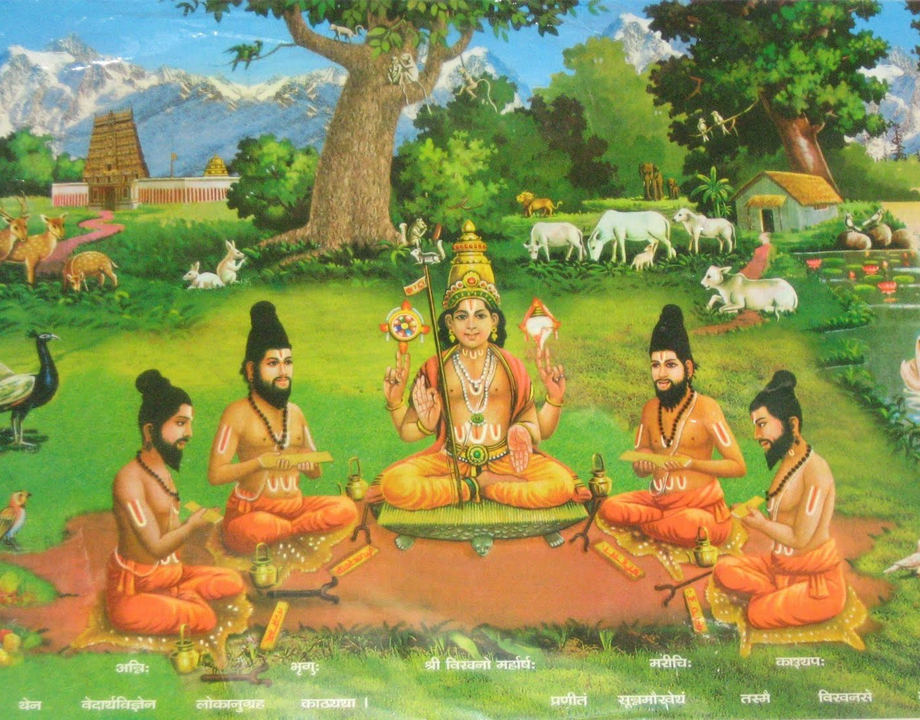
Tulsidas, a renowned poet and saint from India, had several notable experiences throughout his life that are often told through stories and legends. One such story is about his encounter with the sages Yajnavalkya and Bharadvaja, where Yajnavalkya narrated the Ramcharitmanas to Bharadvaja.
Tulsidas is also credited with miraculous powers, such as bringing a dead Brahmin back to life by uttering the name of Lord Rama. He was believed to be a reincarnation of Valmiki, the original composer of the Ramayana, and is the author of the popular devotional hymn called the Hanuman Chalisa.
However, many of the stories and legends surrounding Tulsidas are difficult to verify and may be apocryphal. Nonetheless, his works and teachings continue to be celebrated and revered in India.
Tulsidas was a Hindu saint and poet who lived in India in the 16th century. He is best known for his epic poem, the Ramcharitmanas, which retells the story of the Hindu god Rama. But Tulsidas' life was full of many other fascinating stories and miracles.
According to one account, Tulsidas once brought a dead man back to life. When the Mughal Emperor Akbar heard about this, he summoned Tulsidas to his court. But Tulsidas, who was busy composing verses, refused to go. The emperor then had him arrested and demanded that he perform a miracle. Tulsidas simply replied, "It's a lie, all I know is Rama." The emperor imprisoned him, but Tulsidas continued to chant verses in praise of the god Hanuman. Suddenly, an army of monkeys descended upon the town and wreaked havoc, scratching people and throwing bricks. The emperor fell at Tulsidas' feet and released him. Tulsidas asked the emperor to leave the town, and he did so, becoming a close friend of Tulsidas and ordering that followers of Rama and Hanuman should not be harassed in his kingdom.
In another story, Tulsidas visited a temple of Krishna in Vrindavan, but the Mahant of the temple decided to test him by saying that anyone who bows down to any deity except their cherished form of divinity is a fool. Tulsidas replied with a couplet that he composed on the spot, and the idol of Krishna transformed into an idol of Rama holding a bow and arrow. Some have questioned whether Tulsidas actually composed this couplet.
Tulsidas is also known for having composed many wise sayings and dohas containing lessons for life. One such saying goes, "A place where people are not happy or welcoming when you come, where their eyes have no affection for you, don't go there, even if a mountain of gold is showered."
Tulsidas began composing poetry in Sanskrit in Varanasi, but all the verses he wrote during the day would get lost at night. Shiva then ordered him in a dream to compose poetry in the vernacular instead of Sanskrit, and Tulsidas woke up to see Shiva and Parvati who blessed him and ordered him to go to Ayodhya and compose poetry in Awadhi. Shiva predicted that Tulsidas' poetry would fructify like the Sama Veda. Tulsidas hints at having the Darshan of Shiva and Parvati in both dream and awakened state in the Ramcharitmanas.
Composition of Ramcharitmanas
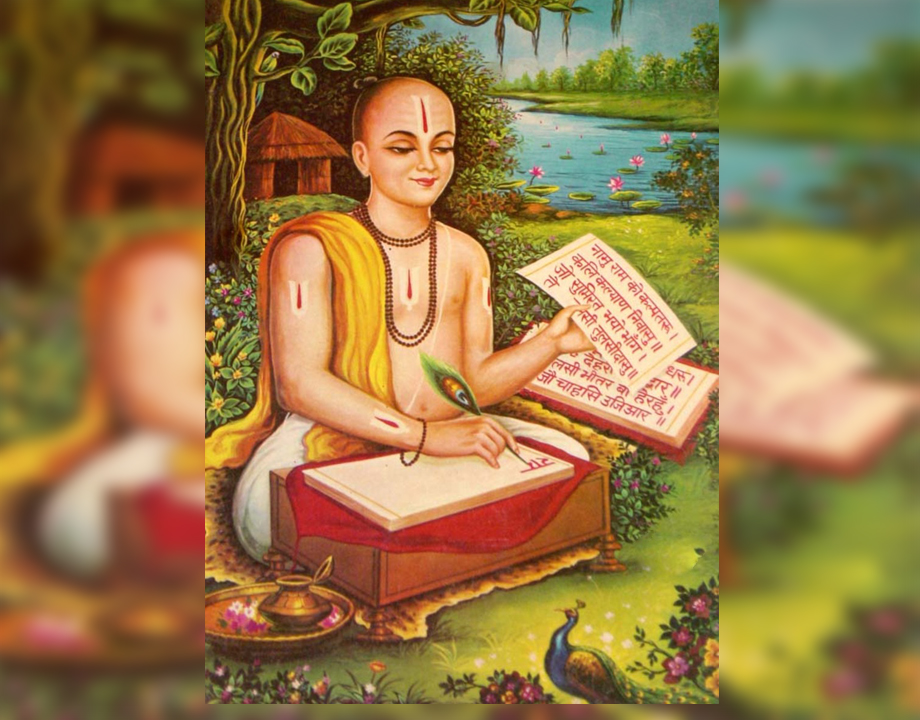
Tulsidas began writing the Ramcharitmanas on Ramnavami day, the ninth day of the bright half of the Chaitra month, in the year Vikram 1631 (1575 CE) in Ayodhya. He completed the epic after two years, seven months, and twenty-six days on Vivaha Panchami day, the fifth day of the bright half of the Margashirsha month, in Vikram 1633 (1577 CE). After finishing the work, he went to Varanasi and recited it to Shiva and Parvati at the Kashi Vishwanath Temple.
Legend has it that the Brahmins of Varanasi were not entirely satisfied with Tulsidas's rendering of the Sanskrit Ramayana in Awadhi and decided to test the worth of the work. They kept a manuscript of the Ramcharitmanas at the bottom of a pile of Sanskrit scriptures in the sanctum sanctorum of the Vishvanath temple overnight with the doors locked. The next morning, when the doors were opened, the Ramcharitmanas was found at the top of the pile. The words "Satyam Shivam Sundaram" were inscribed on the manuscript with the signature of Shiva, and those present reportedly heard the words.
However, some Brahmins were still not convinced and sent two thieves to steal the manuscript. The thieves attempted to break into Tulsidas's Ashram but were confronted by two guards with bows and arrows of dark and fair complexion. The thieves had a change of heart and went to Tulsidas in the morning to ask who the guards were. Tulsidas was aggrieved to discover that they were guarding his home at night and believed that they were none other than Rama and Lakshmana. He sent the manuscript of the Ramcharitmanas to his friend Todar Mal, the finance minister of Akbar, and donated all his money. The thieves were reformed and became devotees of Rama.
Last compositions
In Vikram 1664 (1607 CE), Tulsidas suffered from severe pain all over his body, especially in his arms. To express his agony, he composed the Hanuman Bahuk, which helped relieve his pain. However, later he was afflicted by Bartod boils, which may have ultimately led to his death.
Towards the end of his life, Tulsidas wrote the Vinaypatrika, a work of 279 stanzas where he seeks Rama's blessing and devotion while beseeching him to accept his petition. According to legend, Rama himself signed the manuscript of the work. The 45th stanza of the Vinaypatrika is a popular evening Aarti sung by many Hindus.
Tulsidas passed away at the age of 91 on 31st July 1623 (Shravan month of the year Vikram 1680) at Assi Ghat on the banks of the Ganga river. While the year of his birth is known, the exact date of his death remains disputed among traditional accounts and biographers.

"There can be no happiness for a being nor can its mind know any peace even in a dream so long as it does not relinquish desire, which is an abode of sorrow.No virtue is equal to the good of others and no vice greater than hurting others.”
This quote highlights the importance of relinquishing desire and prioritizing the well-being of others. It suggests that desire is an abode of sorrow and that true happiness and peace of mind can only be achieved by letting go of it. Additionally, it emphasizes the significance of acting for the good of others, as no virtue is as valuable as helping others and no vice is worse than causing harm to them. In essence, the quote urges individuals to prioritize compassion, selflessness, and non-harm in their thoughts and actions.
Tulsidas died aged 111 on 31 July 1623 (Shravan month of the year Vikram 1680) in Assi Ghat on the bank of the river Ganga. Like the year of his birth, traditional accounts and biographers do not agree on the exact date of his death.
Twelve works are widely considered by biographers to be written by Tulsidas, six major works and six minor works. Based on the language of the works, they have been classified into two groups as follows
besides these twelve works, four more works are popularly believed to be composed by Tulsidas which include Hanuman Chalisa, Hanuman Ashtak, Hanuman Bahuk and Tulsi Satsai.

Tulsidas Home in Varanasi where Ramacharitra Manas Hanuman Chalisa was written located near Tulsi Ghat Varanasi

Tulsidas House near Tulsi Ghat, Varanasi on the banks of river Ganga where Hanuman Chalisa and Ramacharitra Manas were written. Temple also exists at this location
Ramacharitamanas (रामचरितमानस, 1574–1576), "The Mānasa lake brimming over with the exploits of Lord Rāma" is an Awadhi rendering of the Ramayana narrative. It is the longest and earliest work of Tulsidas, and draws from various sources including the Ramayana of Valmiki, the Adhyatma Ramayana, the Prasannaraghava and Hanuman Nataka The work consists of around 12,800 lines divided into 1073 stanzas, which are groups of Chaupais separated by Dohas or Sorthas] It is divided into seven books (Kands) like the Ramayana of Valmiki, and is around one-third of the size of Valmiki's Ramayana. The work is composed in 18 metres which include ten Sanskrit metres (Anushtup, Shardulvikridit, Vasantatilaka, Vamshashta, Upajati, Pramanika, Malini, Sragdhara, Rathoddhata and Bhujangaprayata) and eight Prakrit metres (Soratha, Doha, Chaupai, Harigitika, Tribhangi, Chaupaiya, Trotaka and Tomara).It is popularly referred to as Tulsikrit Ramayana, literally The Ramayana composed by Tulsidas. The work has been acclaimed as "the living sum of Indian culture", "the tallest tree in the magic garden of medieval Indian poesy", "the greatest book of all devotional literature", "the Bible of Northern India", and "the best and most trustworthy guide to the popular living faith of its people." But, as he has said "The story of the lord is endless as are his glories" (Hindi: हरि अनंत हरि कथा अनंता।).
Several manuscripts of the Ramcharitmanas are claimed to have been written down by Tulsidas himself. Grierson wrote in the late nineteenth century, two copies of the epic were said to have existed in the poet's own handwriting. One manuscript was kept at Rajapur, of which only the Ayodhyakand is left now, which bears marks of water. According to legend, the manuscript was stolen and thrown into Yamuna river when the thief was being pursued, and only the second book of the epic could be rescued.] Grierson wrote that the other copy was at Malihabad in Lucknow district, of which only one leaf was missing Another manuscript of the Ayodhyakanda claimed to be in the poet's own hand exists at Soron in Kasganj district, one of the places claimed to be Tulsidas' birthplace. One manuscript of Balakanda, dated Samvat 1661, nineteen years before the poet's death, claimed to be corrected by Tulsidas, is at Ayodhya. Some other ancient manuscripts are found in Varanasi, including one in possessi