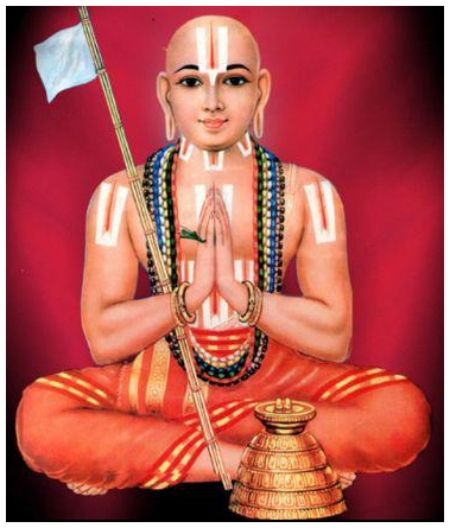
Ramanuja (1017-1137 CE), also known as Ramanujacharya, was an Indian philosopher, guru, and social reformer. He was a prominent figure in the Sri Vaishnavism tradition of Hinduism and played a significant role in the Bhakti movement. Ramanuja's philosophy, known as Vishishtadvaita, emphasized devotion to a personal God as a means to spiritual liberation. He wrote influential texts, including commentaries on the Brahma Sutras and the Bhagavad Gita, and his teachings had a lasting impact on Hindu philosophy. Ramanuja's life and teachings are recorded in traditional hagiographies, although some details have been questioned by modern scholars. He faced persecution from the Chola king Kulothunga II but later returned to Tamil Nadu.
Ramanuja was a prominent philosopher in the Sri Vaisnava tradition. He authored nine Sanskrit texts, including Vedārthasangraha, Sri Bhāshya, and Bhagavad Gita Bhāshya. His philosophy, called Vishishtadvaita, is a form of qualified monism. Ramanuja's epistemology emphasizes perception, inference, and the testimony of scripture. He believed that devotion (bhakti) is an epistemic state and a path to spiritual liberation (moksha). Ramanuja criticized Shankara's interpretation of the Upanishads and proposed a hermeneutic approach that considers the entire scripture. His Vishishtadvaita school shares similarities with Madhvāchārya's Dvaita, but also has distinctions. Ramanuja's influence on Hinduism is compared to Thomas Aquinas in Western Christianity. He reformed the Srirangam Ranganathaswamy temple complex, established centers of study, and converted followers through his teachings. Ramanuja is known by various names, including Śrī Rāmānujāchārya and Ethirājar.
Life span: 1017 – 1137