
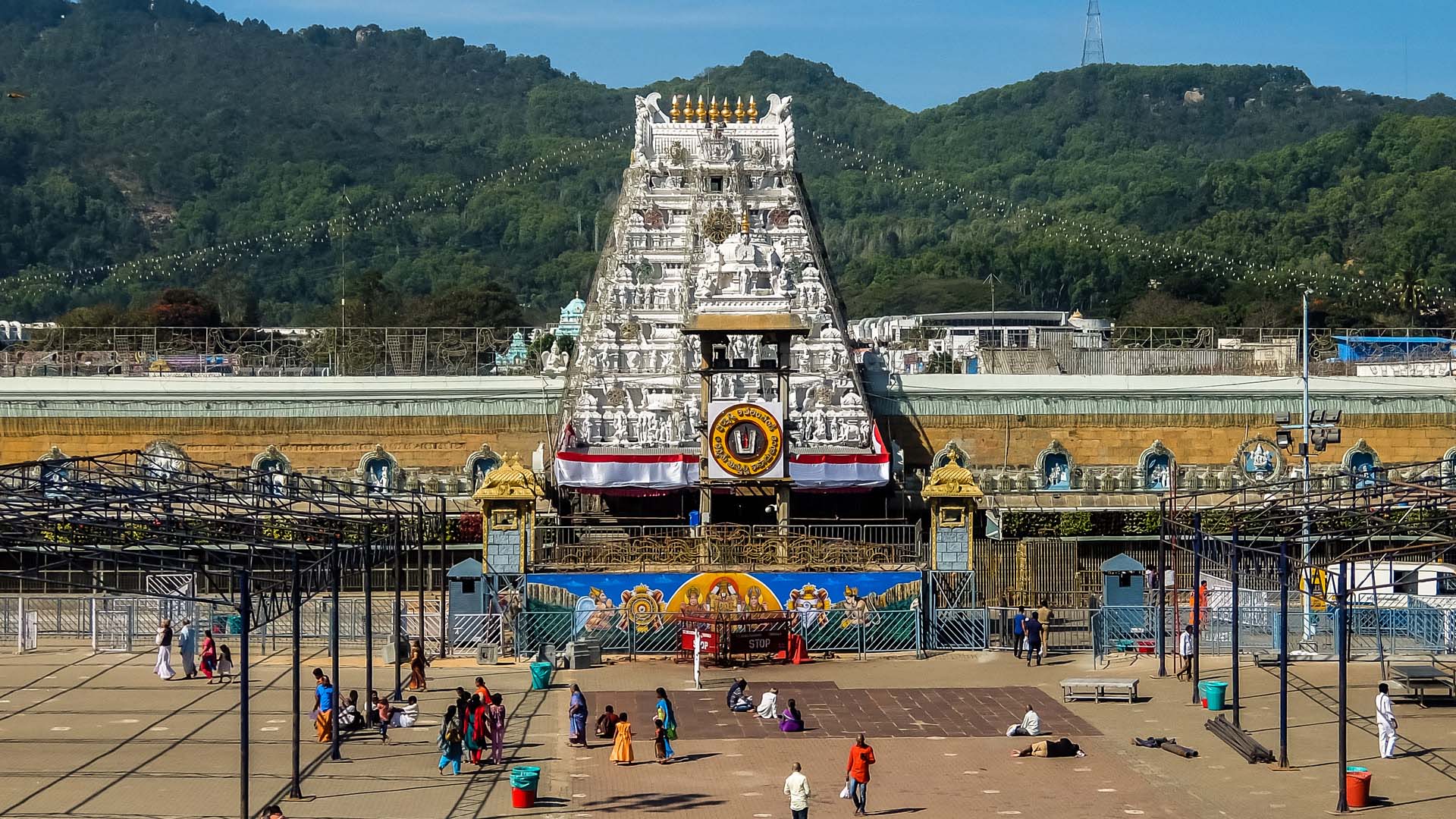
Tirupati is one of the most visited pilgrimage centre in India, famous for its landmark Vaishnav temple situated in the hill town of Tirumala at Tirupati in Chittoor district of Andhra Pradesh, India.It is mostly dedicated to the incarnations of Lord Vishnu. who is believed to have appeared here to save mankind from trials and troubles of Kali Yuga.
Hence the place has also got the name Kaliyuga Vaikuntham and Lord here is referred to as Kaliyuga Prathyaksha Daivam as he fulfils the wishes of devotees.Lord Venkateswara is also known as Balaji, Govinda, and Srinivasa.The destination holds several legendary tales to tell, that fascinates tourists from across the world. Tirupati Balaji holds the record of being the richest as well as the most visited temple of India.
The shrine receives offerings from devotees in cash, jewellery, gold, silver, property deeds, and Demat share transfers and the per day offering is around 22.5 million.
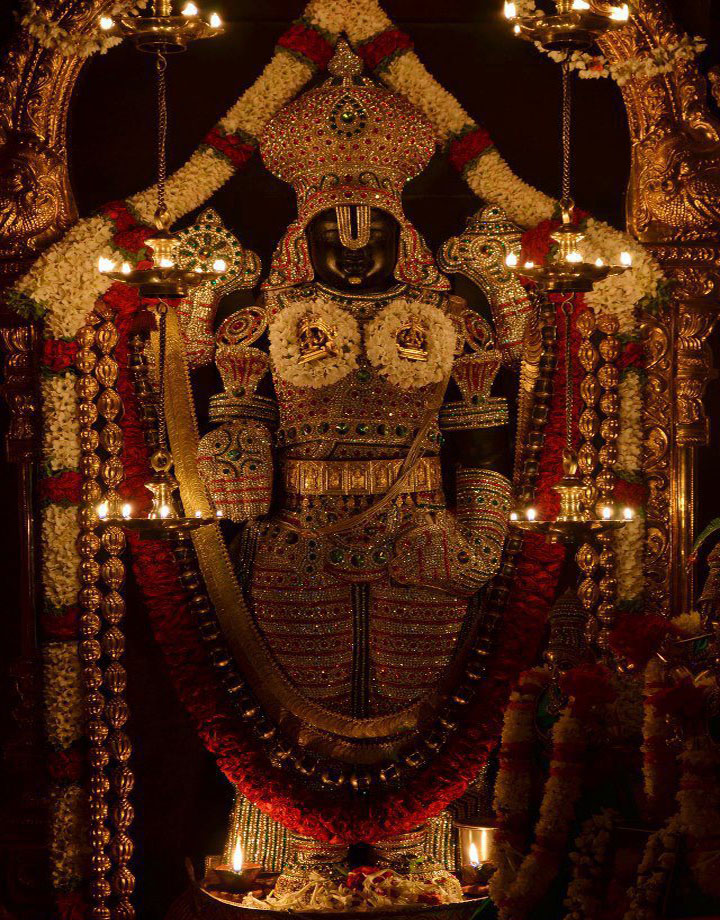
Lord Venkateswara Swamy(Tirumala Dhruva Bera) at Tirumala Hills
Tirumala Dhruva Bera is the name given to the deity of Lord Venkateswara in Tirumala Venkateswara Temple, Andhra Pradesh. Dhruva Bera is the official terminology used for the main deity of a temple with the exact translation being The Immobile image and as the name suggests, the deity is stationary and other deities are used for pujas, sevas that requires the deity's presence outside the garbha griham (sanctum sanctorum).
Other terms used for Dhruva Bera include Moolavar or Moola Virat (Main Deity), Achala (Stagnant).Tirumala Dhruva Bera is considered to be Swayambhu - self-manifested and not created by human. According to Sri Venkatachala Mahatyam, Lord Venkateswara came to reside in this sacred spot to provide blessings to devotees in the Kali Yuga. The deity does not conform to the agamas (rules) for making a deity, thus furthering the belief that the temple's deity is Swayambhu.
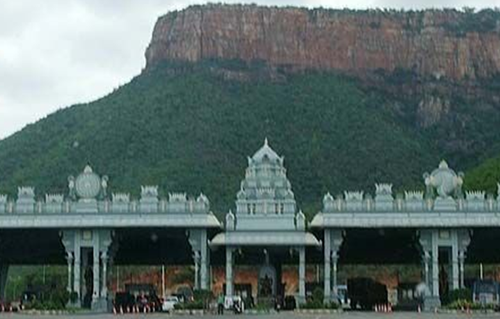
Sacred Tirumala Seven Hills History
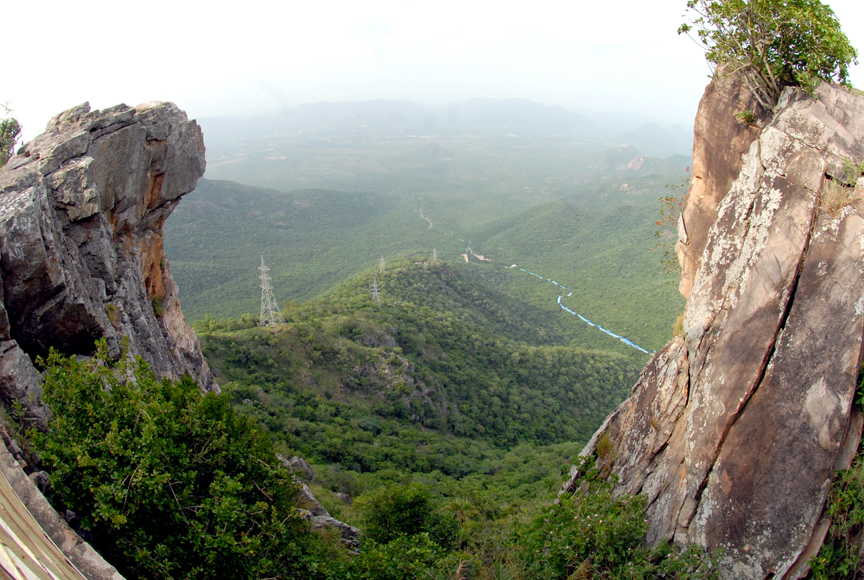
There are many legends associated with the sacred seven hills and the Lord resting atop the Hills here. The legends are so inter-twined as it seems one cannot distinguish and separate the Lord from the sacred seven hills.
These hills are said to have waited for the Lord for thousands and thousands of years. Some of these stories are highlighted here.According to Puranas Seven heads of Adishesa are the Seven Hills of Tirumala
Saptagiri also known as Seven Hills symbolize Saptarishi means the seven sages. Hence the lord is named as Saptagirinivasa. Seven sages named as.
• Vrushabhadri – Hill of Nandi, Lord Shivas’ Vahana
• Anjanadri – Lord Hanumans Hill
• Neeladri – Neela Devi Hill. A belief is set, that the hair offered here by devotees is received by Neela devi, which is due to the boon which was given by Lord Sri Venkateshwara to Neela Devi.
• Garudachalam or Garusadri – Garuda, Vahana of Lord Vishnu
• Seshachalam or Seshadri – sesha Hill, Dasa of Lord Vishnu
• Naraynadri – Narayana Hill, Srivari Padalu are seen here
• Venkatadri – Lord Venkareshwara Hill.
Lord Brahma who was seeing all the sins happening on earth, got worried. He then came to a conclusion, that the right person to handle the evil situations that are taking place on the Earth is Sriman Narayanan.He felt that if the lords feet (Thiruvadi) are stepped on to the earth, the lost glory can be brought back. Or even if a droplet of his blood is shed on earth, the purity and the beauty will be showered on the sacred land.
And following this all the evil will vanish. This issue was shared to Narada Maharishi.All the maharishis had a gathering to discuss on the huge yaagam. And who is the right person to perform this, where how much amount and credits should be given to which god.
According to Naradas view, 3 moorthies who stand as idols for Dharma and Sathyam and who are capable to outstand in any situations of Adharma will be the right choice. Finally, the person who can choose the right person with said characters, can be checked out by ‘Brighu Maharishi’ .Maharishi Brighu’ started of his journey to Lord Shiva, Brahma Deva and Sriman Narayana (Vishnu).
Where Brahman and Shiva failed to reach the expectations of Maharishi and were cursed by him. Brahma was cursed on not having a temple on The Earth.This shows that what is written on the fate will happen, since Brahma Deva was the one who started the process of finding the right one to rule and he himself ended up in curse of Maharishi.
As a result of Thirumaarbhu (Divine Chest) of Sriman Narayana, Maha Lakshmi leaves the place of Sri Vaikuntam and goes off to Earth. Due to this Vikundam lost its glory, which is also said to be a part of Kaliyugam.Without Maha Lakshmi, Sriman Narayana felt lonely at Vaikuntam and he leaves to earth. Aadhiseshan turned himself as a mountain at Tirumala, and Srinam Narayan moves around in search of the goddess Lakshmi.
He was helpless as he could not find her. He has no food, water and just sat in a place.By this Lord Shiva and Brahma were moved and they also came onto the Earth an meet Goddess Lakshmi. They beg her to come back to Vikunta and explained Vishnumoorty’s situation.
Later, goddess turns Lord Shiva and Brahma to turn in the form of Cow and Calf, where they headed into the crew of cowherd person.Then Cow (Brahma Deva) and calf (Lord Shiva) walked towards a mountain covered with sand. There they found Sri Vishnu. They gave him milk, which was then their daily routine. The cowherd person who initially pulled them for grazing wounded why these two were not given him milk. He then decided to follow them to know the reason.
As a result the cowherd person follows the Cow and Calf who are in the form of Lord Brahma and Shiva and sees them giving milk to ‘Putru’. He then wonders and inform the king Chozha. With the guidance of King Choozha, the cowherd person followed them the next day.The Cow and Calf spiritually followed the same routine of their, by offering Milk to ant-hill.
The cowherd tries to destroying the cow with the axe. In order to protect the cow, Sriman Narayan came out of the putru and took the axe into his hand. In the fight between them, the Lord was hurt on his forehead and started to bleed. His blood reached the earth. As said earlier, the earth became pure and destroyed the evil activities of Kaliyug
Varaghar and Sri Srinivas Avataram
Coming out of the putru, Lord Sriman Narayan went to ‘Vakula Mata’ who then took the lord to Sri Varagha Moorthy who save Bhoomipiratti from Hiranyatshankan, where the lord gave him the avatar of ‘Sri Varaghar’ as the saint said he could not carry the weight of earth any more. Here the lord asked for a favour to show a place in the hill to stay.
As Varaghar agreed that Vishnu moorthi could stay with Vakula Mata.Varaghar muni asked for a boon, that each and every devotee who comes to visit the Lord Sri Srinivas should first worship Varagha and then see the lord. If this is no followed by devotees, they will not be give the blessings of the main deity and the offerings were not to be accepted.
The lord Sriman Narayan accepted to this and said that prasadam and prayers will be offered to him first and then only to lord in Tirupathi. The wish was accepted by Sri Srinivasa.In the course of an elephant comes into the yard of Srinivas (Name of Sri Vishnu who was named by Vakula Mata). In order to drive away the elephant, Srinivas comes across Padmavathi Devi and both falls in love with each other.Srinivas tells Vakula Mata about his desire to get married to Pamavathi Devi, the daughter of ‘Akasha Raja’, for which she was worried about the difference of status.
Realising that Srinivas was the incarnation of Sri krishna of Dwaparayugam.Srinivas send his mother to talk about the match with the King.
At the same time Srinivas takes the avatar of Tarrot hand reader and tells the princess that Srinivas it the lord of all lokas and he is the right alliance for her to get married to.The King finally agrees to his daughters wish as understanding that these two love birds were a couple in the previous Janma.Successfully the marriage of Lord Srinivasa and Padmavathi is performed. Maha Lakshmi realises that Sri Vishnu got married to Padmavathi, through Naradamuni.
The lord then gets stuck with both the wives (Sri Maha Lakshmi & Padmavathi) and turns off into a statue at Tirumala Tirupati.It is said by Brahma & Shiva Lords, that Swamy would be in this avataram till the end of Kali yugam at Tirumala.
Here is Another Legend:
Accordingly to Hindu mythology and legends, foundation to the Tirumala Hills can be traced back to Treta yuga, i.e. during Lord Ram’s existence on earth. When Ravana takes away Sita from the forest, Lord Agni (God of fire) intervenes and takes Sita away from him in exchange for one Vedavati, once the staunch devotee of Lord Vishnu.
Vedavati wanted to become wife of Lord Srimannarayana and to achieve this end, she goes into forests and starts meditating when she was disturbed by Ravana. Ravana, astonished to see the beauty of Vedavati, wanted to marry her but she refuses. Ravana insists and threatens her with abduction. Having found no way to get out of this situation, Vedavati vows to cause Ravana’s downfall and death before sacrificing her life by becoming ahuti in fire. Agni, the God of Fire, saves and protects her.
Thus, when Ravana takes away Sita from the forest, Agni intervenes and sends Vedavati in place of Sita. This is said to be the reason for Lord Ram’s asking Sita (Vedavati, who is rescued from Ravana) for perfomance of Agni-Pravesh to get back Sita from Agni. Till such time, Agni protects Sita. Thus, Vedavati goes with Ravana, spends about a year in Lanka thereby becoming the reason for his downfall and death.When Vedavati performs Agni-pravesh, Lord Agni appears and Sita is restored to Rama with gratitude.
.png)
Here is Another Legend:
Once upon a time, there was one staunch devotee (asura) of Lord Vishnu by name Vrishabhasura. Once he performs ghora-tapas for the Lord. The Lord appears and readies to shower boons on the asura. But Vrishabhadra asks a boon which Lord Vishnu readily accepts. The boon was ‘Vrishabhasura’s desire to fight with the Lord’.The fight began and both sides put in their strengths.
Even after putting up a very brave front, Vrishabhasura is defeated by Lord Vishnu. The Lord first destroys the ‘Aham’ (or Ego) of Vrishabhasura. The asura then begs Lord to forgive him and asks asylum which the Lord readily grants. Then Vrishabhasura asks the Lord to put His Lotus Feet on his head and rest there! Lord Vishnu assures Vrishabhasura that, during Kali yuga,
He is going to reincarnate as Lord Venkateswara and he would rest on him. Vrishabhasura becomes a big mountain on earth and waits for the Lord to come down to earth. At last, during Kali yugam, the Lord reincarnates as Venkateswara and rests on the mountain/hill fulfilling the desire of Vrishabhasura.
.png)
Tirumala Modern History :
Rulers of several South India have paid homage to Lord Sri Venkateswara and patronised the ancient temple.The Pallavas of Kancheepuram (about 9th Century A.D.), the Cholas of Thanjavur (about a Century later), the Pandyas of Madurai and the kings and chieftains of Vijayanagar (during the 14th & 15th Centuries AD) were devotees of the Lord.
It was also said that they competed with one another in patronising and endowing the shrine with valuable offerings and contributions.The later years were different. It was only during the great Vijayanagara Empire that the contributions to the temple increased manifold. Sri Krishnadevaraya is believed to possess the shrine in his kingdom.
Even after the decline of the Vijayanagar dynasty, nobles and chieftains from all parts of the Country continued to pay their homage and offer gifts to the temple shrine.The General of the Maratha kingdom, Raghoji Bhonsle, also visited the temple and set up a permanent endowment for the conduct of worship in the Temple.
He also presented valuable jewels to the Lord, including a large Emerald which is still preserved in a box named after the General.Also among the later rulers who have endowed large amounts were the rulers of Mysore and Gadwal.After the fall of the Hindu Kingdoms, the Muslim rulers of Karnataka, later the British took over, and many of the temples came under their supervisory and protective control.
In 1843 A.D., the East India Company divested itself of the direct management of Non-Christian places of worship and native religious institutions. The administration of the shrine of Sri Venkateswara and a number of estates were then entrusted to Sri Seva Dasji of the Hatiramji Mutt at Tirumala and the temple remained under the administration of these Mahants till 1933 A.D.
In 1933, the Madras Legislature passed a special Act, which empowered the Tirumala Tirupati Devasthanams (TTD) Committee to control and administer a fixed group of temples in the Tirumala-Tirupati area through a Commissioner appointed by the Government of Madras.
In 1951, the Act of 1933 was replaced by an enactment whereby the administration of TTD was entrusted to a Board of Trustees, and an Executive Officer was appointed by the Government .
On the re-organisation of States on linguistic basis, a separate State for Telugu speaking people was formed and the Government of Andhra Pradesh has took over the Administration of the temple through this Board. The chairman and members of the Board are nominated by the Endowments Department of the Government of Andhra Pradesh.
The provisions of the Act of 1951 were retained by Charitable and Religious Endowments Act, 1966
Meera Subramanian says,
The temple architecture and spiritual energy are amazing. Felt deeply connected.
Lakshmi Narayan says,
Every visit brings inner peace and strength. Jai Shri Ram ????
Suresh Kumar says,
The divine presence here is very powerful. A truly holy Swayambhu temple
Kavya Nair says,
Such a serene and spiritually uplifting temple. Felt calm and blessed.
Arjun Patel says,
A sacred place filled with devotion and history. Highly recommend visiting with family
Ananya Reddy says,
Blessed to have darshan here. The vibrations and positivity are beyond words.
Priya Iyer says,
An unforgettable spiritual experience. The atmosphere is so pure and peaceful.
Rahul Sharma says,
Felt divine energy as soon as I entered the temple. Truly a powerful Swayambhu kshetra. ????
06:00 - 08:00 hrs Tiruppavada
02:30-03:00 hrs Suprabhatam
03:30 - 04:00 hrs Thomala Seva
04:00 - 04:15 hrs Koluvu and Panchanga Sravanam inside Bangaru Vakili (Ekantam)
04:15 - 05:00 hrs First Archana i.e.,Sahasranama Archana
06:00 - 07:00 hrs Sallimpu, Second Archana (Ekantam), Tiruppavada, Second Bell
08:00 - 19:00 hrs Darshanam
12:00 - 17:00 hrs Kalyanostavam,Brahmostavam,Vasanthostavam, Unjal Seva
17:30 - 18:30 hrs Sahasra Deepalankarana Seva
19:00 - 21:00 hrs Pedda Suddhi, Night Kainkaryams, Poolangi Alankaram and Night Bell
21:00 - 01:00 hrs Poolangi Alankaram and Darshanam
00:30 - 00:45 hrs Suddi and preparations for Ekanta Seva
00:45 hrs Ekanta Seva
Tirumala Tirupati Devasthanams
TTD Administrative Building
K.T. Ro
Explore spiritual insights, reviews, and divine writings shared by our esteemed Priests & Guides.
Sri Ramananda shares the importance of morning poojas for spiritual awakening.

Guru Venkatesh explains how daily mantra chanting transforms mental and spiritual well-being.




Leave a Comment