
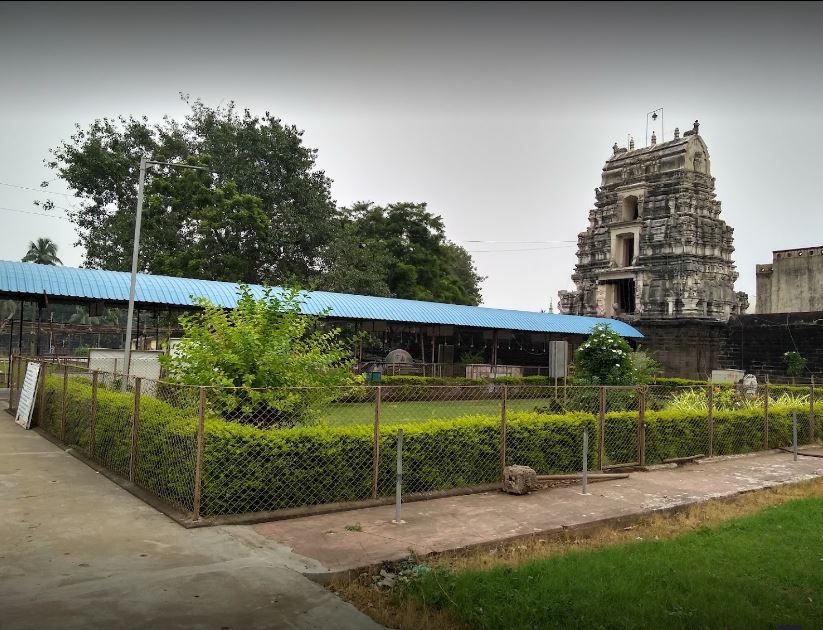
Draksharamam Bhimesvara Swamy Temple or Draksharamam Manikyamba Devi Temple or Sri Manikyamba Sametha Sri Bhimeswara Swamy Temple is an ancient temple located in Draksharamam, Ramachandrapuram Mandal, East Godavari District, Andhra Pradesh State.
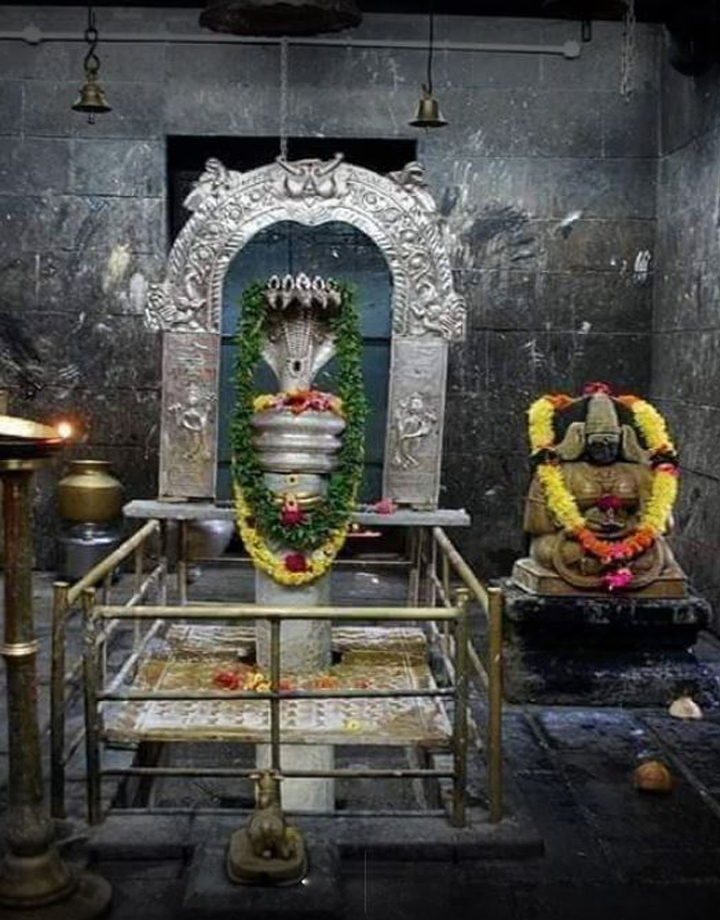
This temple is one of Pancharama Kshetras in Andhrapradesh, is one of the Trilinga kshetras in Telugu-speaking states and one of the 18 Shakti Peeth temples in India. The presiding deities are Lord Bhimeswara Swamy (Lord Siva) and Manikyamba Devi (Parvati Devi). Here there is a big temple of Lord Bhimeswara Swamy, constructed in many Prakaras and the Manikyamaba Devi temple is situated in the inner circle of Lord Bhimeswara Swamy temple.
As per the inscription at Pithapuram, the temple of Kumaram Chalukya Bhimesvara was built by Chalukya Bhima-I , the famous Eastern Chalukya king towards the end of the 9th century AD. The presiding deity Lord Siva, in the form of tall Sivalinga, was named after the monarch as Chalukya Bhimesvara.
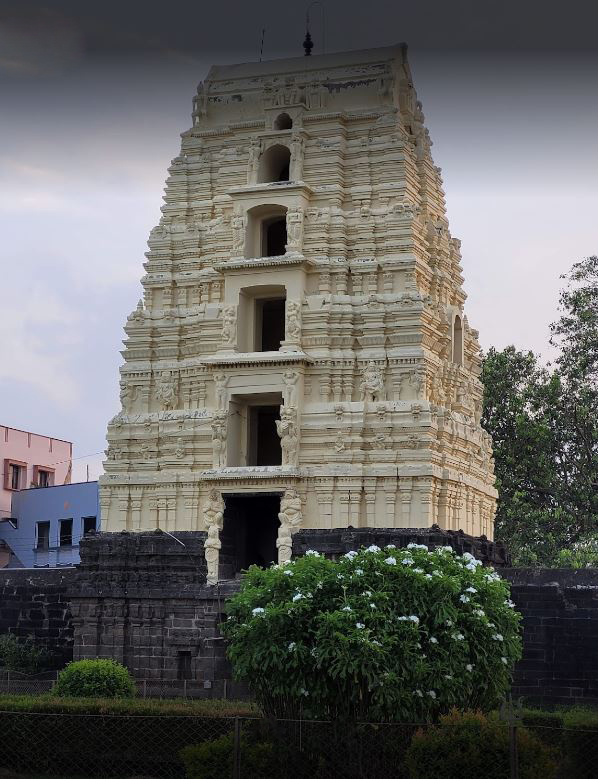
The inscription mentions that Chalukya Bhima was the son of Vikramaditya, who had won 360 battles and ruled the country for thirty years. The temple is similar in architecture to that of the Bhimesvara temple at Samalkot. Two prakara walls, built of dressed sandstone, surround the temple.

The outer prakara wall has a gopura entrance on all four sides. The four gopura – entrances have Ardha mandapas on either side. The inner enclosure wall is partitioned horizontally into two sections, which are separated by a cornice and have a two-storeyed pillared mandapa running throughout the inner side.
Draksharamam, is one of the most frequented pilgrim centre of South India. It is one of the Shiva Pancharamas and one of 18 Shakti Peethas. It is famous as both Shiva kshetra and Shakti kshetra. Lord Bheemeswara swamy and Manikyamba are main the deities here. This place is also called as Dakshina Kashi.
There is an interesting legend regarding the name of this place and existence of Lord Shiva in this place. During Tarakasura vadha, the Shiva Linga which was in the throat of Tarakasura broke into five pieces and one of the pieces fell here. Thereafter, it came to be known as Draksharamam.
After the death of Sati, the 12th part of her body i.e. her left cheek fell here which is now known in the form of Goddess Manikyamba.
Daksha Prajapati, father of Goddess Parvathi arranged for a yagna and did not invite Lord Shiva and Sati. But, Goddess Sati went there against Siva’s desire and got humiliated by her father and sacrificed her life in the same fire. Angry Shiva created Lord Veerabhadra out of his hair to destroy the yagna. After the demolition, Lord Shiva had done rudrataandavam carrying Sati’s corpse in anger.
Lord Vishnu had used his disc to cut Sati Devi’s dead body into 18 pieces to calm Lord Shiva. The places where the parts of Sati Devi fell were called Shakthi Peetas, the holy places of Goddesses. One among them is at Draksharamam and the goddess here is named Manikyamba.
Sri Manikyamba Devī at Draksharamam is one of the 18 Sakthi PIthas. The portion of Sati Devi that exists in the Daksaramam temple was believed to be installed by Lord Siva. About 1200 years ago Adi Sankaracarya visited this temple and installed a powerful Sri Chakra in the shrine of the Goddess.
Near the Draksharamam Temple, we can still see the Homa Kunda of Daksha Prajapati, where Satī Devi left her body. Now the homa kunda has become a small tank. An idol of the Goddess Sati has been enshrined in the center and there are some small temples adjacent to the homa kunda.
Another legend says that the demon Tarakasura after doing severe penance was booned by Lord Shiva with his AtmaLinga. Further, Tarakasura committed many sins against devas. Devas carried out Goddess Parvathi’s marriage with Lord Shiva and Lord Shanmukha was born. Shanmukha in a battle against Tarakasura destroyed the Atmalinga in Tarakasura’s neck and killed him.
The pieces of Atmalinga fell at 5 holy places in Andhra Pradesh which were popularly known as ‘Pancharamams’. The first one is Amareshwara in Amaravathi, installed by Lord Indra; the second one is Someswara in Bheemavaram installed by Lord Chandra; the third is Ksheera Ramalingeswara in Palakollu installed by Lord Rama; the fourth is Kumara Rama Bheemeswara in Samrlakota installed by Shanmukha and the fifth one is Bheemeswara who had shown himself in Drakshramam.
The sages requested River Godavari to sanctify the piece fallen in Drakshramam, but the Godavari had responded late and hence Lord Shiva emerged himself in Draksharamam. River Godavari came here with the request of Saptarshi and hence it is also called SapthaGodavari, which is on the east of the temple as Pushkarini.
Once Lord Shiva tested Sage Vyasa by which he could not get any food by donation in Kasi. Feeling hungry, Sage Vyasa lost his patience and cursed Kasi, but Goddess Annapurna gave him food and Lord Shiva asked him to leave Kasi. The goddess suggested to go to Drakshramam, which is equivalent to Kasi. Vyasa considered it as Dakshina Kasi and worshipped Lord Shiva, and it was also named Vyasa Kasi.
Lord Shiva taught a lesson to Vyasa that Kasi is meant for the liberation of the soul but not for a luxury living, whereas Draksharamam is meant for both, as stated in Bheema khanda.
Meera Subramanian says,
The temple architecture and spiritual energy are amazing. Felt deeply connected.
Lakshmi Narayan says,
Every visit brings inner peace and strength. Jai Shri Ram ????
Suresh Kumar says,
The divine presence here is very powerful. A truly holy Swayambhu temple
Kavya Nair says,
Such a serene and spiritually uplifting temple. Felt calm and blessed.
Arjun Patel says,
A sacred place filled with devotion and history. Highly recommend visiting with family
Ananya Reddy says,
Blessed to have darshan here. The vibrations and positivity are beyond words.
Priya Iyer says,
An unforgettable spiritual experience. The atmosphere is so pure and peaceful.
Rahul Sharma says,
Felt divine energy as soon as I entered the temple. Truly a powerful Swayambhu kshetra. ????
Morning: 6:00 AM to 12:00 Noon
Evening: 3:00 PM to 8:00 PM.
Contact Number : 08857 – 252488.
A
Explore spiritual insights, reviews, and divine writings shared by our esteemed Priests & Guides.
Sri Ramananda shares the importance of morning poojas for spiritual awakening.

Guru Venkatesh explains how daily mantra chanting transforms mental and spiritual well-being.





Leave a Comment