Sri Kurmanatha swamy Temple
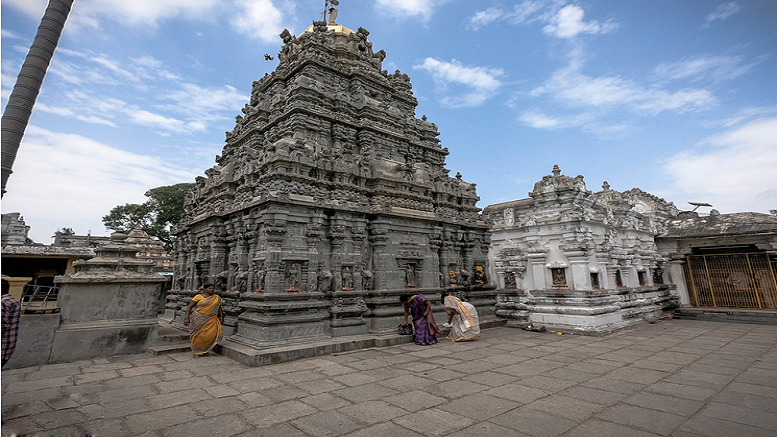
Speciality
Sri Kurmam shrine is believed to be the MOKSHA STHAANAM and that the Sweta Pushkarini has cosmic cleansing powers..The sanctum of Kurmanatha temple has both a tortoise image and the anthropomorphic Vishnu with Lakshmi. The temple was an important centre of Vaishnavism in the medieval period along with Simhachalam.
Sthalam
The Kurmanathaswamy temple, also known as the Kurmanatha temple or Srikurmam temple, is a Hindu temple dedicated to Kurma – the second avatar of Vishnu. It is located in Srikurmam village, Srikakulam district in Andhra Pradesh, India. Built in the 11th-century in the Eastern Chalukyan style, this Dravida architecture temple was expanded in later centuries, and it is dedicated to Vishnu as Kurmanathaswamy and his consort Lakshmi as Kurmanayaki.
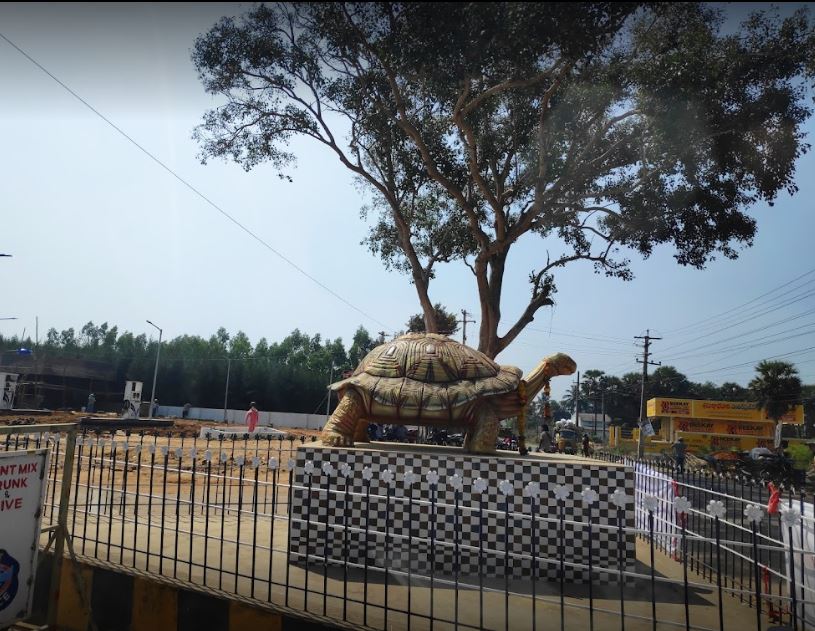
Srikurmam is the only known pre-14th-century Indian temple that is dedicated to the Kurma avatar. The sanctum of Kurmanatha temple has both a tortoise image and the anthropomorphic Vishnu with Lakshmi. The temple was an important centre of Vaishnavism in the medieval period along with Simhachalam. Later Naraharitirtha, a disciple of Madhvacharya, was instrumental in making Srikurmam the seat of Vishnavite religious activities.The temple has two dhvajasthambas, 108 ekasila (single-stone) pillars, with none resembling each other.
These bear numerous inscriptions. A tortoise park has been built within the temple to honor and conserve the adult and young star tortoises. The temple has primarily Vaishnava iconography and murals, but also reverentially includes Shaiva (Ganesha, Shiva) and Shakti (Lakshmi, Durga) icons.
Srikurmam follows both Shaivite and Vaishnavite traditions of worship. Four daily rituals and four annual festivals are celebrated in Srikurmam, out of which the three-day Dolotsavam is the major one. Gajapathi Rajus of Vizianagaram are the trustees of the temple, which is maintained and administered by the Hindu Religious and Endowment Board of the Government of Andhra Pradesh. The Indian postal department issued a stamp featuring the temple on 11 April 2013.
Era
Information not available.
Puranam
During the reign of king Swetha Chakravarthi, this area was referred to as Swetha Giri. Swetha Chakravarthi's wife Vishnu Priya was a devotee of Vishnu. When she was observing a fast on an Ekadasi day, Swetha Chakravarthi approached her intending to make love. When she refused, saying the time was not ideal, the king became adamant. She prayed to Vishnu, who created a stream of water, separating the couple.
Swetha Chakravarthi was carried away in the ensuing flood and Vishnu Priya followed him to the hilly terrains of Swetha Giri. The sage Narada initiated an upadesam of the Kurma Narayana mantra and asked the king to pray to Vishnu using it. By the time Vishnu appeared in the form of the Kurma (tortoise) avatar, the king's health had deteriorated. Vishnu then made his Sudarshana Chakra makes an impression in the nearby land, forming a lake.
Swetha Chakravarthi bathed in the lake and regained his health, after which it was referred to as Swetha Pushkarani. Upon the king's request, Vishnu manifested as the deity of Kurmanatha. According to the Padma Purana, Brahma officiated the celestial rituals and consecrated the deity with Gopala Yantra. Vishnu is worshipped as Kurmanatha Swamy or Kurma Narayana, along with his consort Lakshmi, who is referred to as Kurmanayaki.
Later, a tribal king visited the Swetha Pushkarani and was impressed with it. After learning about the story of its origin from Swetha Chakravarthi, the tribal king constructed a tank around the lake and began worshipping the deity regularly. The tribal king used to stay in Sage Sampangi's monastery, which was situated on the Western side of the temple. Upon the king's request, the deity started facing west. The sage Durvasa visited the temple later with his disciples; the event of his arrival was considered significant. Rama's sons Lava and Kusha were said to have worshipped Vishnu as Kurmanatha in Srikurmam. In Dvapara Yuga, Balarama visited the temple and was denied entry by Bhairava, who was serving as the temple's Kshetrapala (guardian deity).
Infuriated, Balarama threw Bhairava away from the temple premises. Kurmanatha came to know this and gave Balarama permission to enter the temple. Balarama, in resentment, cursed that Srikurmam would be the only temple where Vishnu would be worshipped in the form of Kurma Narayana. Legends also say that upon Vishnu's request, Anjaneya agreed to guard the temple.
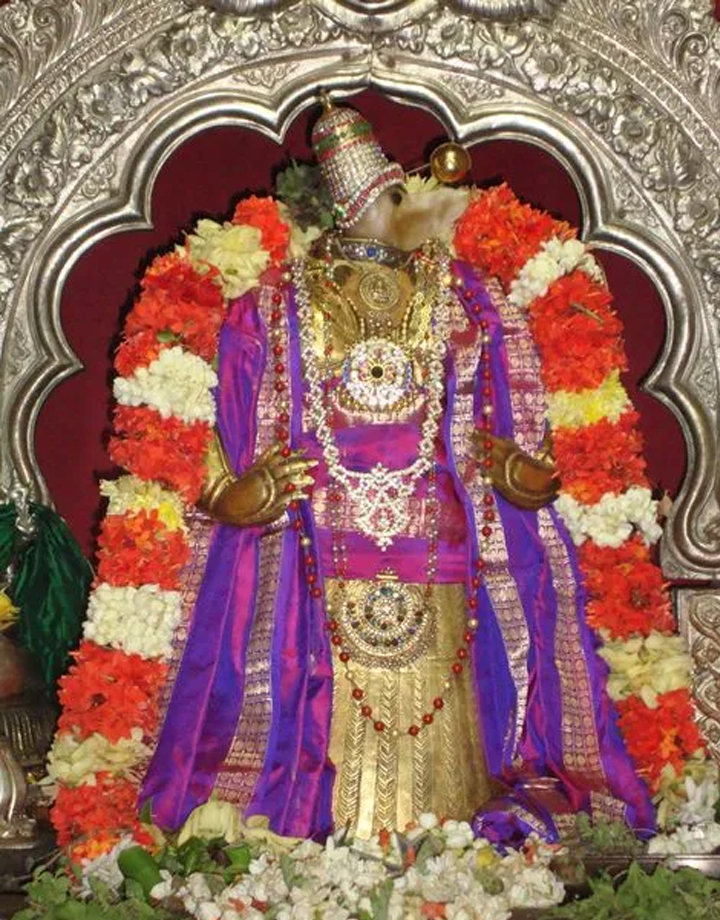
The utsava deities of Govindaraja Swamy and his consorts Sridevi and Bhudevi were found in the Swetha Pushkarani in the 12th century AD. The utsava deities of Rama, Sita, and Laksmana were presented by Naraharitirtha. All these deities are located in a small room near the sanctum sanctorum and are worshipped daily.
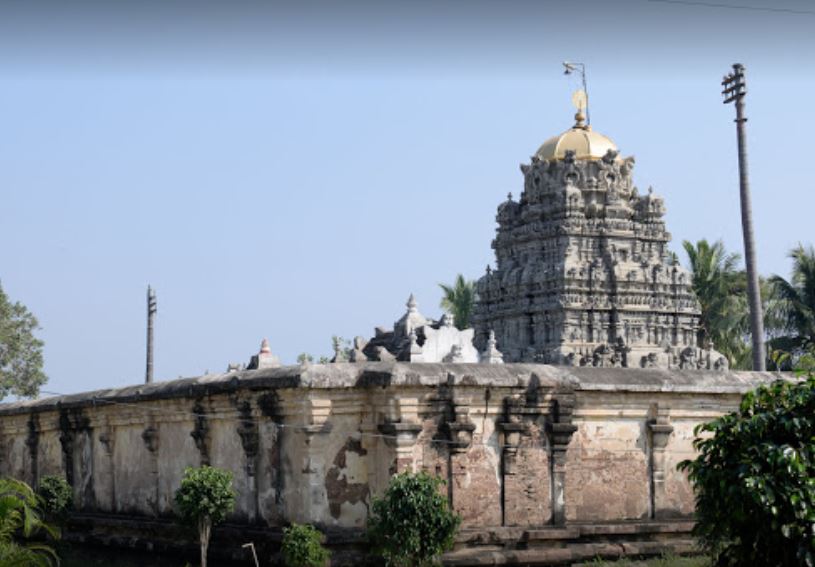
Srikurmam temple is known for its distinctive architectural style. The design of the gopuram is different from the regular style seen at other Vaishnavite temples. It also has two dhvajasthambas, one on the west and the other on the east, which is another rare element in a Vaishnavite temple. The upper part of the sanctum sanctorum is built in the form of an ashtadala padmam (eight-petaled lotus). The devotees can directly enter the sanctum sanctorum to offer prayers, unlike the method specified by the traditional rules of Vaishnavism.
The deity of Kurmanathaswamy is made of black stone, but due to regular applications of sandalwood paste, it appears yellow. It sits on a platform made of stone with a length of 5 feet, a height of 1 foot, and a width of 4 feet. The deity is 2.5 feet (0.76 m) long and consists of three stone structures. The stone representing the head faces the west; the middle stone represents the body of the tortoise; the small stone at the rear end, covered with swirling circles, represents either the tail of the tortoise or the Sudarshana Chakra.
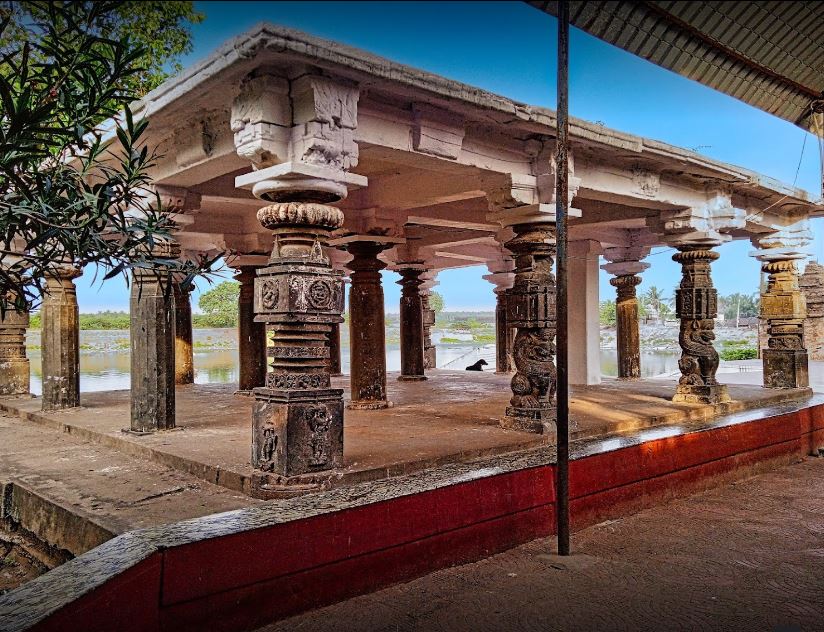
Beside the sanctum sanctorum of Kurmanatha, there is a temple dedicated to Kurmanayaki in which a deity of Andal is found. Hatakeswara, Karpureswara, Koteswara, Sundareswara, and Pathalasiddheswara are among the temple's guardian deities. The temple's tank Swetha Pushkarani is also known by the name Sudha Kundam. In the middle of the temple tank, there is a small construction named Narasimha mandapam. The sand below the waters of the temple tank is white in colour, and is known as Gopi Chandanam. Legends say that Krishna played with gopikas in these waters, after which the sand turned white when a sage saw them. The temple contains 108 ekasila (single-stone) pillars, with none resembling each other. They bear few inscriptions related to the royal lineages that existed in this area in the past.
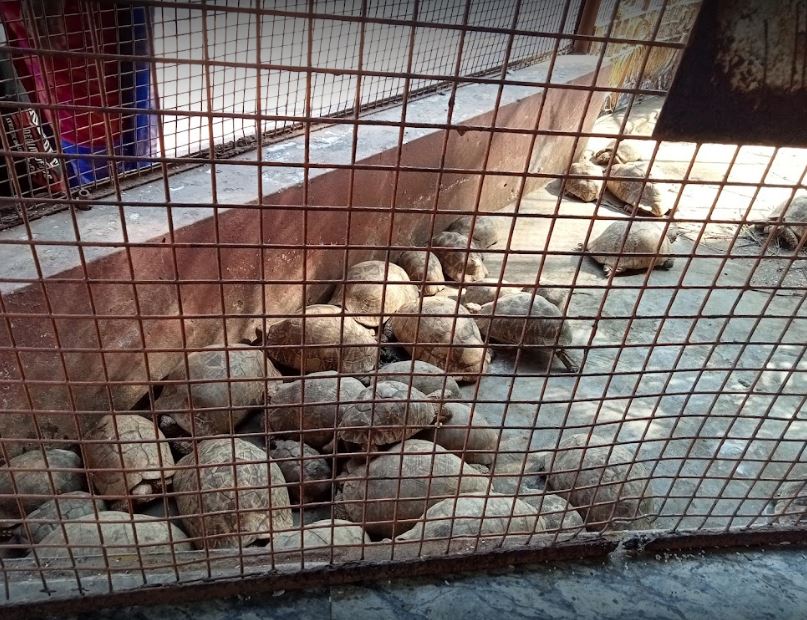
In the temple's premises, a tortoise park has been built to conserve the adult and young star tortoises, which are found in the foothills and fields of Srikakulam. Srikurmam is the only conservation centre for this species. Devotees offer these tortoises from the nearby fields. They also feed gongura leaves to these tortoises as a token of respect for the deity. The temple also contains 42 mural paintings of Krishna on its walls.
Varnam
Sri Kurmam shrine is believed to be the MOKSHA STHAANAM and that the Sweta Pushkarini has cosmic cleansing powers..The sanctum of Kurmanatha temple has both a tortoise image and the anthropomorphic Vishnu with Lakshmi. The temple was an important centre of Vaishnavism in the medieval period along with Simhachalam.
Highlights
Information not available.
Sevas
Information not available.
Timings
Srikakulam Srikurmam Temple Daily Sevas And Timings:
Temple opening hours: 06:00 AM to 07:45 PM
- Suprabhata Seva, Nityabhishekam, Prabhodika, Mangala Snanam, Thiruvaradana, Sarva darshan, Balabhogam: 06:00 AM to 12:00 PM
- Rajabhogam: 12 PM
- Nitya Thiruvaradana, Amngalasnanam: 7 PM
- Pavalimpu Seva: 8 PM
Address
Srikurmam Rd, Srikurmam, Andhra Pradesh 532404
Contact : 089422 83555.
, 41853, AP, IN
Gallery







Leave a Comment