
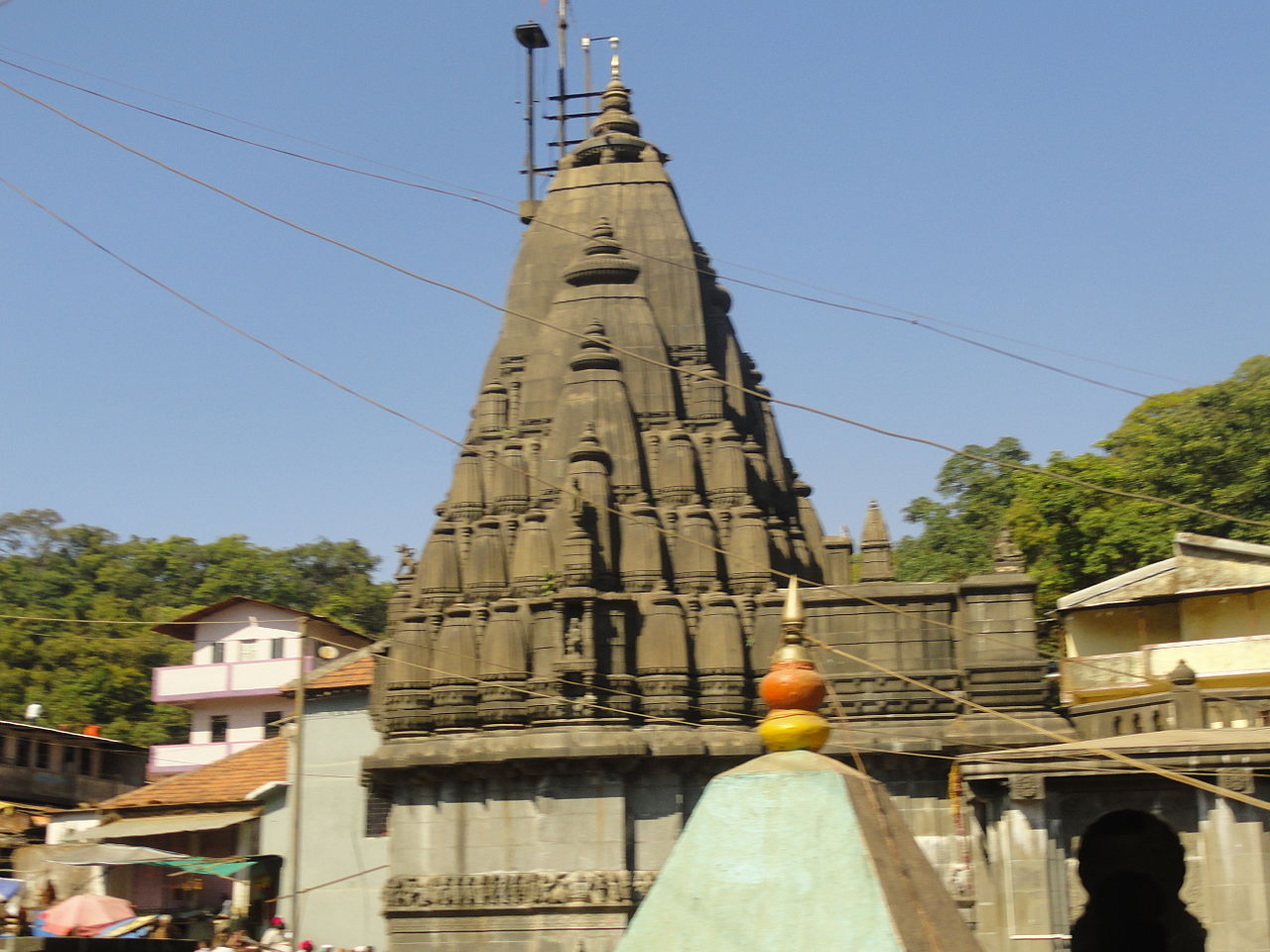
Bhimashankar Temple is a Jyotirlinga shrine located 50 km Khed taluka (alias Rajgurunagar), near Pune, in Maharashtra, India. It is located 127 km from Shivajinagar (in Pune) in the Ghat region of the Sahyadri Mountains. Bhīmāshankar is also the source of the river Bhima, which flows southeast and merges with the Krishna river near Raichur. The other Jyotirlinga shrines in Maharashtra are Trimbakeshwar near Nashik and Grishneshwar.Bhimashankar is an ancient shrine, one of the 12 Jyotirlingas of Shiva.
Far away from the tumult of urban life, peeping through the white clouds, Bhimashankar can be termed a pilgrim's paradise. The dense forests surrounding the high ranges are an abode for rare species of flora and fauna. Situated at the extreme end of the Sahyadri Ranges, this place gives a wonderful view of the world around the local rivers and hill stations.Bhimashankar is the source of the Bhima River, which flows southeast and merges with the Krishna River.
With endless stretches of virgin forests, lofty peaks that seem to reach out to the heavens, and the whispering waters of the Bhimā River, Bhimashankar is definitely one of God's choicest creations.It seems as if Lord Shiva is keeping a silent vigil over the majestic ranges of the Sahyadris. The serenity interrupted only by the silent murmuring of the cool breeze and the occasional chirping of birds, Bhimashankar is a trekker's delight and a traveller's sojourn.
As per the Shiv Mahapuran, once Brahma (the Hindu God for creation) and Vishnu (the Hindu God for protection) had an argument about creation. To test them, Shiva pierced the three worlds as a huge endless pillar of light, the jyotirlinga. Vishnu and Brahma split their ways to search downwards and upwards respectively to find the end of the light in either direction. Brahma lied that he found out where it ends, while Vishnu accepted defeat.
Shiva appeared as the second pillar of light and cursed Brahma that He would have no place in ceremonies while Vishnu would be worshipped till the end of eternity. The jyotirlinga is the supreme partless reality, out of which Shiva partly appears. The jyotirlinga shrines, thus are places where Shiva appeared as a fiery column of light.There are 64 forms of Shiva, not to be confused with Jyotirlingas.
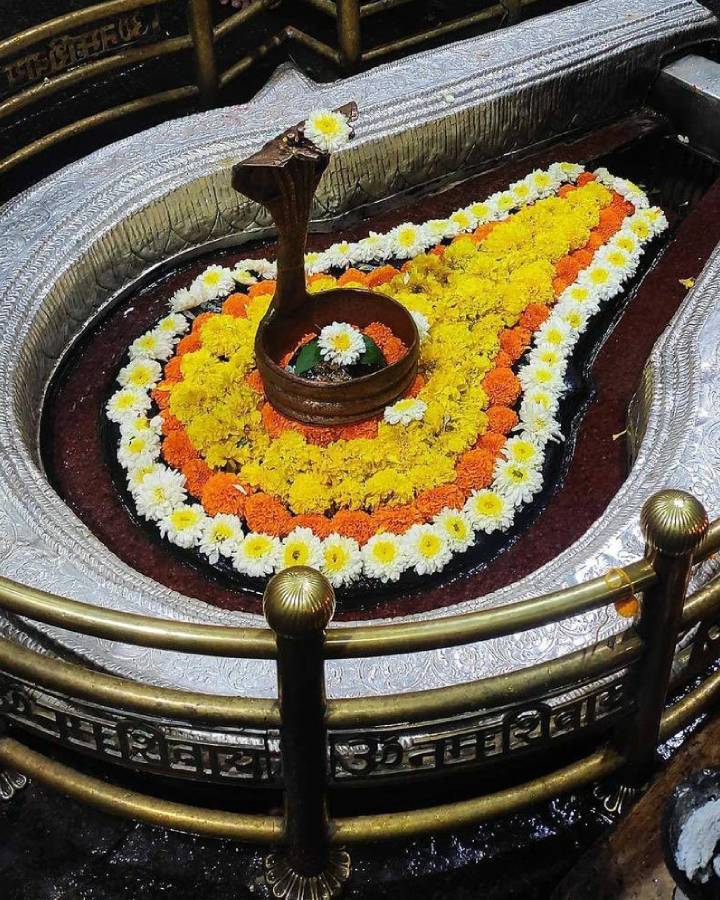
Each of the twelve jyothirlinga sites take the name of the presiding deity - each considered different manifestation of Shiva.At all these sites, the primary image is lingam representing the beginningless and endless Stambha pillar, symbolizing the infinite nature of Shiva.
The twelve jyothirlinga are Somnath in Gujarat, Mallikarjuna at Srisailam in Andhra Pradesh, Mahakaleswar at Ujjain in Madhya Pradesh, Omkareshwar in Madhya Pradesh, Kedarnath in Himalayas, Bhīmāshankar in Maharashtra, Viswanath at Varanasi in Uttar Pradesh, Triambakeshwar in Maharashtra, Vaidyanath in Jharkhand, Nageshvara Jyotirlinga at Dwarka in Gujarat, Rameshwar at Rameswaram in Tamil Nadu and Grishneshwar in Maharashtra. There is a clear reference in stotra about "Paralyam Vaidyanatham" meaning Vaidyanath jyotirlinga situated at Parali (Beed district) in Maharashtra.
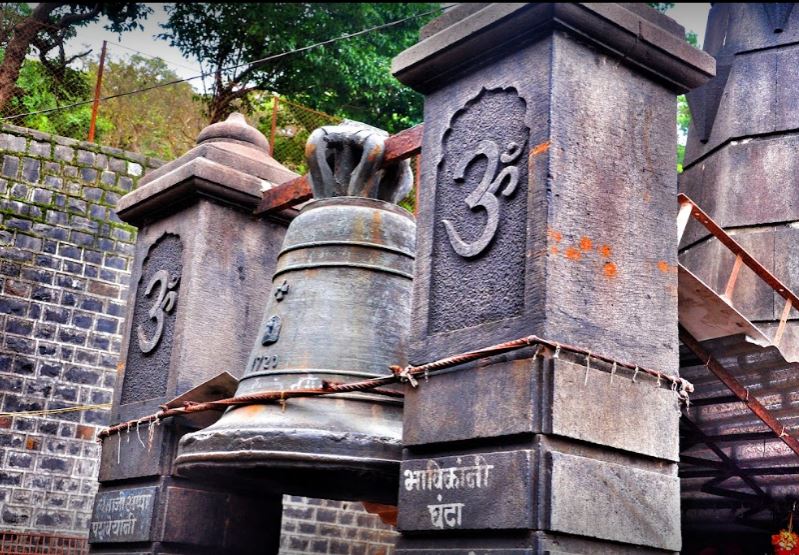
Bell at the temple

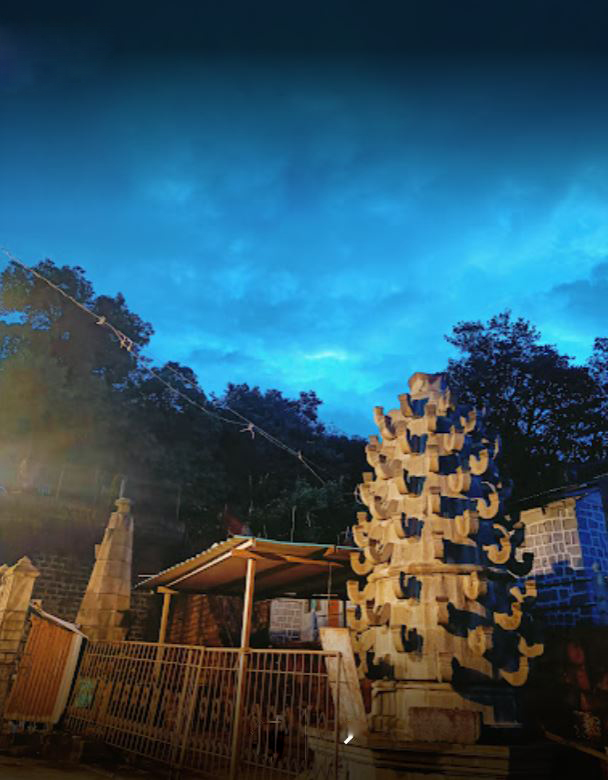
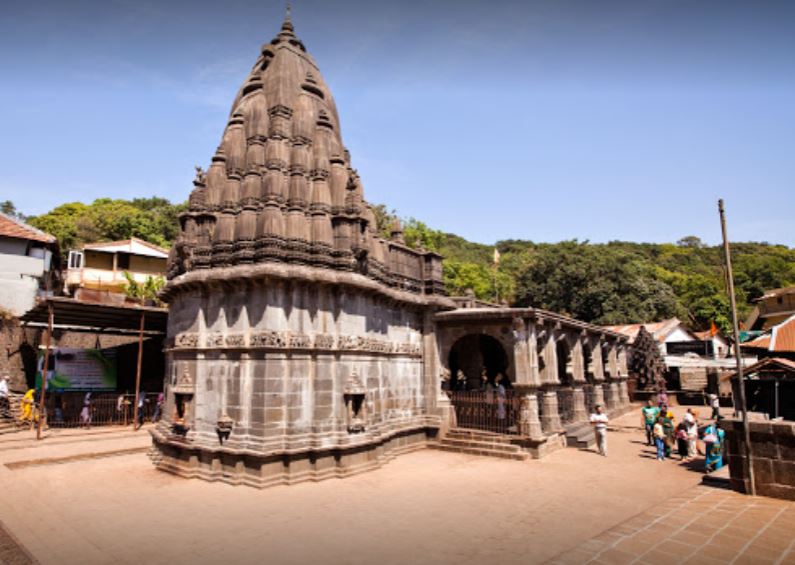
The Bhimashankar temple is a composite of old and new structures in the Nagara style of architecture. It shows the excellency of the skills achieved by ancient Vishwakarma sculptors. It is a modest yet graceful temple and it dates back to the 13th century while the sabhamandap was built in the 18th century by Nana Phadnavis. The shikhara was built by Nana Phadnavis.
The great Maratha ruler Chattrapati Shivaji Maharaj is said to have made endowments to this temple to facilitate worship services. As with other Shiva temples in this area, the sanctum is at a lower level.Although the structure here is fairly new, the shrine Bhimashankaram (and the Bhimarathi river) have been referred to in literature dating back to the 13th century CE. Saint Jnaneshwar is said to have visited Tryambakeshwar and Bhimashankar.
A unique bell (Roman style) can be seen in front of the temple. This bell has an idol of Mother Mary with Jesus. This large bell was presented by Chimaji Appa (Brother of Bajirao Peshwa I and uncle of Nanasaheb Peshwa). On 16 May 1739, Chimaji Appa collected five large bells after he won a war against the Portuguese from the Vasai Fort. He offered one here at Bhimashankar and the others at Menavali near Wai in front of a Shiva Temple on the banks of the Krishna river, Banshanker temple (Pune), Omkareshwar Temple (Pune) and Ramlinga temple (Shirur).
There are Buddha style carvings of Amba-Ambika, Bhootling, and Bhimashankar in the hills of Manmaad near Bhimashankar at a height of 1034 metres. A big bell in Hemadpanthi structure built by Nana Phadanavis is a feature of Bhimashankar. Places that can be visited in the vicinity include Hanuman Lake, Gupt Bhimashankar, Origin of River Bhima, Nag Phani, Bombay Point, and Sākshi Vinayak.
Bhimashankar is a reserved forest area of 130.78 km2 and was declared a wildlife sanctuary in 1985. This sanctuary is a part of the Western Ghats, so it is rich in floral and faunal diversity. A variety of birds, animals, insects and plants can be seen. A rare animal Malabar Giant squirrel locally called as "Shekaru" can be found in the deep woods. The Bhorgiri fort is close to Bhimashankar.
Meera Subramanian says,
The temple architecture and spiritual energy are amazing. Felt deeply connected.
Lakshmi Narayan says,
Every visit brings inner peace and strength. Jai Shri Ram ????
Suresh Kumar says,
The divine presence here is very powerful. A truly holy Swayambhu temple
Kavya Nair says,
Such a serene and spiritually uplifting temple. Felt calm and blessed.
Arjun Patel says,
A sacred place filled with devotion and history. Highly recommend visiting with family
Ananya Reddy says,
Blessed to have darshan here. The vibrations and positivity are beyond words.
Priya Iyer says,
An unforgettable spiritual experience. The atmosphere is so pure and peaceful.
Rahul Sharma says,
Felt divine energy as soon as I entered the temple. Truly a powerful Swayambhu kshetra. ????
| Tuesday | 5AM–9:30PM |
| Wednesday | 5AM–9:30PM |
| Thursday | 5AM–9:30PM |
| Friday | 5AM–9:30PM |
| Saturday | 5AM–9:30PM |
| Sunday | 5AM–9:30PM |
| Monday | 4AM–9:30PM |
A/p,bhimashankar Bhimashankar wadi Tal - khed , dist, Maharashtra 410509, In
Explore spiritual insights, reviews, and divine writings shared by our esteemed Priests & Guides.
Sri Ramananda shares the importance of morning poojas for spiritual awakening.

Guru Venkatesh explains how daily mantra chanting transforms mental and spiritual well-being.







Leave a Comment