Shri Vimala Shakti Peetha Temple
Speciality
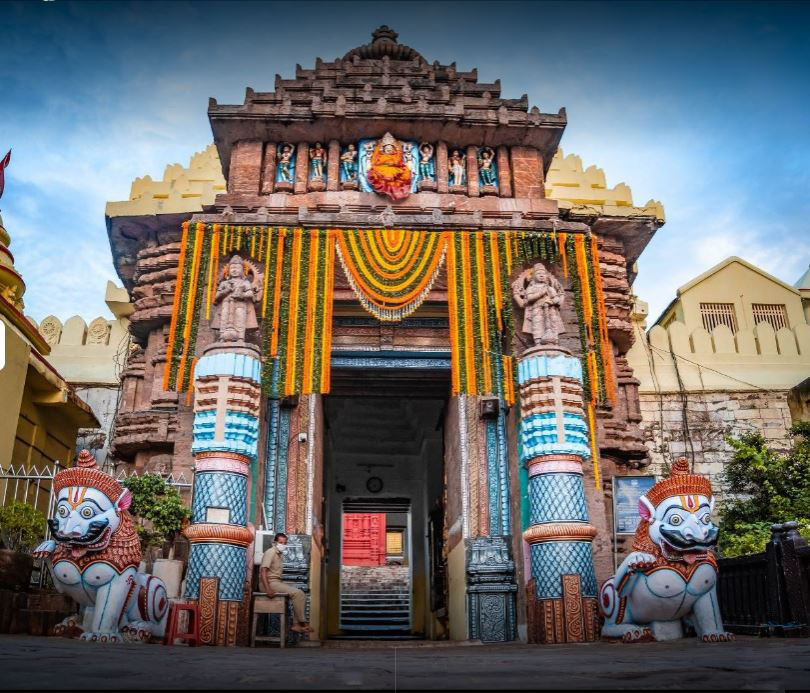
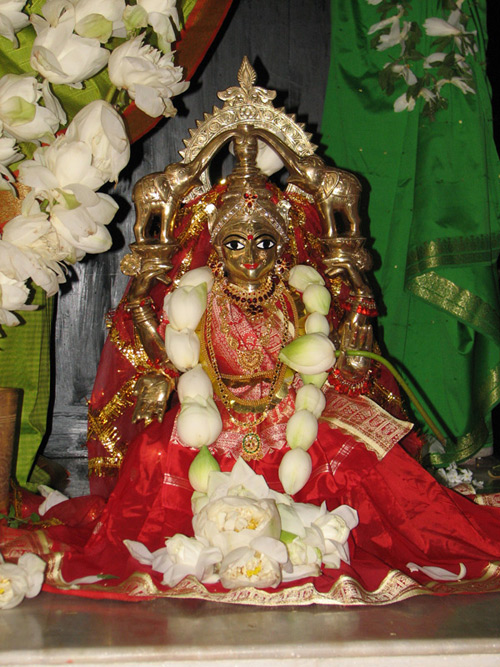
Vimala or Bimala Shaktipeeth is one of the four Adi Shakti Peethas located in Puri Odissa. The temple is dedicated to goddess Bimala and is situated to the right of Jagannath temple inside Puri temple complex, next to the sacred Rohini Kund. It is believed that the feet / Pada Khanda of Sati Devi fell here
Sthalam
The Vimala Temple or Bimala Temple is a Hindu temple dedicated to goddess Vimala (Bimala), located within the Jagannath Temple complex in Puri in the Indian state of Odisha. It is generally regarded as a Shakti Pitha, among the holiest temples dedicated to the Hindu Goddess.The temple is located in the south-west corner of the inner enclosure of the Jagannath temple complex and on the western corner of the tower of Jagannath, next to the sacred pond Rohini kunda.
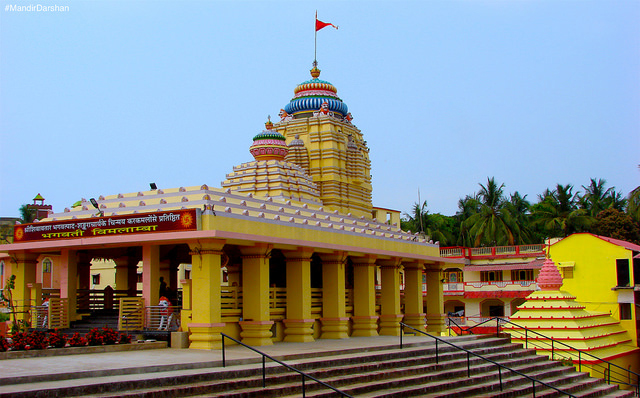
The temple faces east and is built of sandstone and laterite. It is built in the Deula style with four components; vimana (structure containing the sanctum), jagamohana (assembly hall), nata-mandapa (festival hall) and bhoga-mandapa (hall of offerings).
The temple was renovated around 2005 and is maintained by the Archaeological Survey of India, Bhubaneswar Circle.Though a small shrine in the temple complex, the Vimala temple is important to the Goddess-oriented Shakta and Tantric worshippers, who revere it even more than the main Jagannath shrine. Vimala is considered to be the sister of Jagannath and a guardian of the temple complex. Devotees pay respect to Vimala before worshipping Jagannath in the main temple.
Food offered to Jagannath does not get sanctified as Mahaprasad until it is also offered to Vimala. The Goddess-oriented festival of Durga Puja in the Hindu month of Ashvin (October) is celebrated for sixteen days at Vimala, culminating with Vijayadashami.
The Vimala Temple or Bimala Temple is a Hindu temple dedicated to goddess Vimala (Bimala), located within the Jagannath Temple complex in Puri in the Indian state of Odisha. It is generally regarded as a Shakti Pitha, among the holiest temples dedicated to the Hindu Goddess.
The temple is located in the south-west corner of the inner enclosure of the Jagannath temple complex and on the western corner of the tower of Jagannath, next to the sacred pond Rohini kunda. The temple faces east and is built of sandstone and laterite.
It is built in the Deula style with four components; vimana , jagamohana (assembly hall), nata-mandapa and bhoga-mandapa .The temple was renovated around 2005 and is maintained by the Archaeological Survey of India, Bhubaneswar Circle.
Though a small shrine in the temple complex, the Vimala temple is important to the Goddess-oriented Shakta and Tantric worshippers, who revere it even more than the main Jagannath shrine. Vimala is considered to be the Tantric consort of Jagannath and a guardian of the temple complex.
Devotees pay respect to Vimala before worshipping Jagannath in the main temple. Food offered to Jagannath does not get sanctified as Mahaprasad until it is also offered to Vimala. The Goddess-oriented festival of Durga Puja in the Hindu month of Ashvin (October) is celebrated for sixteen days at Vimala, culminating with Vijayadashami.
Era
Information not available.
Puranam
The Vimala Temple is considered one of the Shakti Pithas, the most sacred temples of the Hindu Goddess, identified with Parvati or Durga. It is considered to be a prime example of the importance of the Shakti tradition in Odisha. It is customary to worship the god Shiva (Parvati's consort) at each Shakti Pitha in the form of Bhairava, the male counterpart or guardian of the presiding goddess of the Shakti Pitha.In Goddess-oriented worship, Vimala (Bimala) is regarded as the presiding goddess of the Purushottama (Puri) Shakti Pitha.Jagannath, The panchbhrama, is worshipped as the Pitha's Bhairava.
This is a departure from the usual tradition of Bhairava as a form of Shiva. So, in this temple complex, Vishnu–one of the Hindu trinity–is equated with Shiva, another of the trinity; this is interpreted to convey the oneness of God. In this regard, Vimala - generally associated with Shiva's consort - is also considered as Lakshmi, the consort of Vishnu.Conversely, Tantrics consider Jagannath as Shiva-Bhairava, rather than a form of Vishnu.
The main sanctum of the Jagannath Temple has three deities: Jagannath, Balabhadra (elder brother of Krishna, sometimes identified with Shiva) and Subhadra (the younger sister of Krishna and Balabhadra). In Jagannath-centric traditions, while Lakshmi is the orthodox consort of Jagannath in the temple complex, Vimala is the Tantric (heterodox) consort and guardian goddess of the temple complex.
Vimala is identified with the goddesses Katyayini, Durga, Bhairavi, Bhuvaneshvari and Ekanamsha in various texts and rituals. She is considered the shakti of Vishnu as well as Shiva in the climactic Durga Puja festivities in the temple. She appears as Mahishasuramardini (Durga as slayer of the demon Mahishasura) or Vijayalakshmi (the warrior form of Lakshmi) in New Delhi Konark stele, 13th century stone stele originally from Konark Sun Temple and now housed in National Museum, New Delhi.According to Hindu legend, Sati, the daughter of Prajapati Daksha, married Shiva against the wish of Daksha. Daksha organised a great yajna (sacrifice), but did not invite Sati and Shiva. Uninvited, Sati reached the yajna-site, where Daksha ignored Sati and vilified Shiva. Unable to withstand this insult, Sati sacrificed herself in the fire. The wild, grief-stricken Shiva wandered the universe with her half-burnt corpse. Finally, Vishnu dismembered her body into 51 parts, each of which fell on different places on the earth, each creating a Shakti Pitha.The list of Shakti Pithas differ in various religious texts. Many mention Vimala or Jagannath temple complex as a Shakti Pitha, and calls the location by various names. In the Kalika Purana, four Pithas (centres of Tantrism) are mentioned, corresponding to the four cardinal directions. The Oddiyana or Uddiyana (now clearly identified as Odisha) in the west hosts the temple of Katyayini (identified with Vimala) and her consort Jagannath. The Hevajara Tantra, which has a similar list, also mentions Katyayini as the Bhairavi and Jagannath as the Bhairava in the Pitha of Udra (Odra, identified with Odisha).
The Pithanirnaya or Mahapithanirupana section from the Tantrachudamani mentions Viraja-kshetra in Utkala (present-day Odisha) as a Shakti Pitha, with Vimala as the presiding goddess (Devi), Jagannath as Bhairava and her navel as the body part that fell here. One version of this text, however, demotes the site from a Pitha to an upa-Pitha (subordinate Pitha). Here, the Uchchhishta (that is, left-over or partially eaten food) of Sati is said to be the "fallen part" ( anga-pratyanga) and the temple location is called Nilachal or "Blue mountain", which is the traditional name of the site of the Jagannath temple complex.Nilachala or Nila Parvata is mentioned as an upa-pitha also in the Shiva-charita with Vimala and Jagannath as the Devi and Bhairava respectively.
The Tantric work Kubjika Tantra names Vimala among 42 Siddha Pithas, where Siddhis - a set of supernatural powers - can be gained.The Devi Bhagavata Purana, Prana Toshini Tantra and Brihan Nila Tantra name the Vimala temple as a Pitha in their list of 108 temples.The Matsya Purana mentions Purushottama Kshetra with goddess Vimala as a Shakti Pitha. The Vamana Purana notes it as a sacred pilgrimage site. The Mahapitha Nirupanam also mentions Vimala and Jagannath as deities of the Pitha. In the Namasttotra Sata, a Puranic list of 100 mother goddesses, Vimala of Purushottama is named. The Devi Purana also mentions it as a Pitha where the feet of Sati fell.
The central icon of Vimala is of sixth century CE.The present structure, based on its architecture, seems to have been built in the ninth century under the Eastern Ganga dynasty, possibly over ruins of an earlier temple.Its architecture is similar to the shrine of Narasimha near the Mukti-mandapa (a temple hall) in the Jagannath temple complex, dated to the ninth century. The Madala Panji states that the temple was constructed by Yayati Keshari, a ruler of Somavashi Dynasty of South Kosala. Kings Yayati I (c. 922–955) and Yayati II (c. 1025–1040) are known by the title Yayati Keshari. The sculptures, especially the parshvadevatas (attendant deities), as well as the background slab of the central icon, reflect the Somavashi style and may be part of the original temple, on whose ruins the new temple was constructed. Vimala is believed to have preceded even the central Jagannath shrine.
Hindu philosopher and saint Adi Shankara (c. 8th century) is believed to have established Govardhana matha in Puri, with Vimala as its presiding goddess. According to Starza (author of The Jagannatha Temple at Puri), the Jagannath Temple was once a centre of worship for the Trimurti of Brahma, Vishnu and Shiva, along with their consorts and the three central forms of the Hindu Goddess, Sarasvati, Lakshmi and Parvati (in the form of Vimala).
The Shri Vidya sect devoted to Goddess worship was strong here until the 17th century. Slowly, Shri Vidya and Shiva-centric Shaiva traditions were eroded but remnants continue, with the Vishnu-centric Vaishnavism becoming the sole tradition. The Tantric Panchamakara, which includes fish, meat, liquor, parched grain and ritual intercourse, were replaced with vegetarian offerings and dance of devdasis. Fish was caught locally and offered to the goddess.King Narasimhadeva, who ruled between 1623–47, ended the meat and fish offerings of the goddess,although the tradition was later partly revitalized. Today, the goddess is offered meat and fish on special days.
Varnam
Vimala or Bimala Shaktipeeth is one of the four Adi Shakti Peethas located in Puri Odissa. The temple is dedicated to goddess Bimala and is situated to the right of Jagannath temple inside Puri temple complex, next to the sacred Rohini Kund. It is believed that the feet / Pada Khanda of Sati Devi fell here
Highlights
Information not available.
Sevas
Information not available.
Timings
Puri Shri Vimala Temple Darshan Timings:
Morning: 6:00 to 11:30 AM
Evening: 3:00 to 9:00 PM
Address
Puri, Odisha – 752001.
, 60, OR, IN
Gallery







Leave a Comment