
The chief legend of Bakreshwar relates to the creation of the Shakti Peethas. Sati, the daughter of Prajapati Daksha, was married to the god Shiva versus his wishes. Daksha arranged a great yajna but did not invite Sati and also Shiva. Uninvited, Sati reached the yajna-site, where Daksha ignored Sati as well as Shiva.
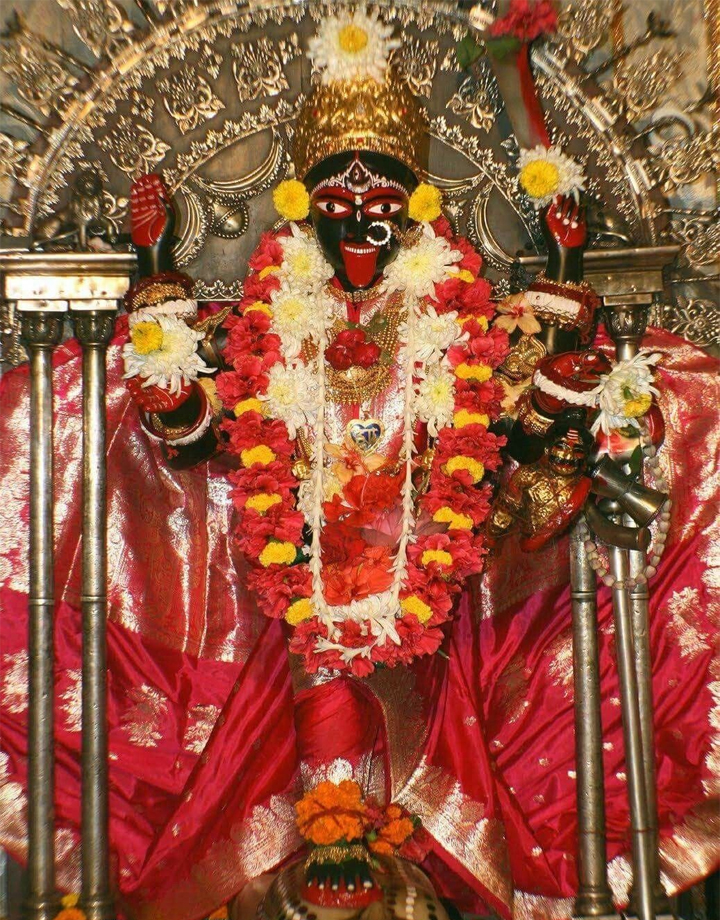
Sati was not able to withstand this insult. So, Devi Sati gave her life by jumping into the fire of Havan organized by her father King Daksh. When Lord Shiva was running around the planet carrying her body that Lord Vishnu divided the body into 51 parts utilizing his Sudarshan chakra. Out of those 51 parts, from which the ‘The portion between Devi Sati’s eyebrows- symbolic of her mind ’ of Sati fell to this place. Here Sati is called Mahishmardini and Lord Shiva is called Bhairav Vakranath.

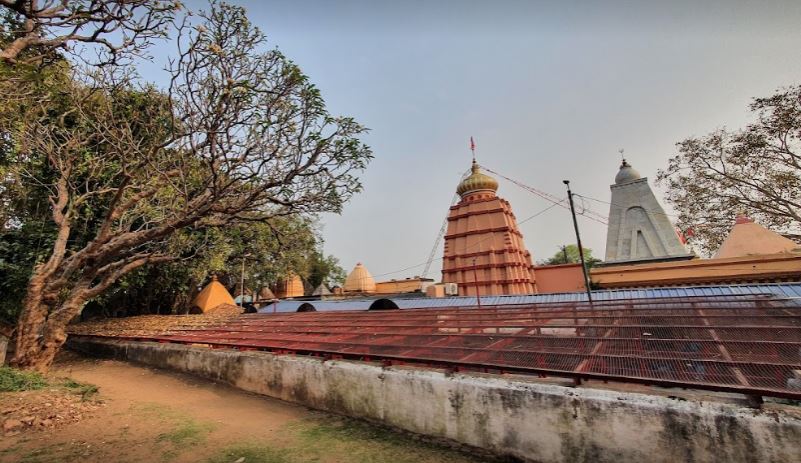
The Bakreshwar Temple of West Bengal lies on the banks of the Paaphra River in the district of Birbhum, around 24 km from the town of Siuri and 240 km from Kolkata. The temple is renowned for its Oriya-style of architecture. Inside the temple complex are the Mahishmardini and the Vakranath temple. The former has ancient paintings of the goddess, preserved well by the Archaeological Survey of India
The portion between Devi Sati’s eyebrows- symbolic of her mind – is said to have fallen in this region when Lord Vishnu used his Sudarshan chakra on her burnt corpse. A shrine was erected later and was consecrated to the worship of Shaivaite forces.
Said to be one of the most powerful Shaktipeeth's, Bakreshwar (also called Vakreshwar) , the idol worshipped is Devi Mahishmardini (destroyer of Mahishasur) who is protected by the Bhairav Vakranath. The Phaphra River is said to be the Remover of Sins. This region is known particularly for its scenic beauty. There are seven hot springs surrounding the region- Agni Kund, Brahma Kund, Surya Kund, Saubhagya Kund, Amrita Kund, Kheer Kund, Jibat Kund and Vairav Kund, and each is associated with a ShivLinga. The ShivLingas can be found close to every spring. The Mahamuni Ashtabhakta is said to have found enlightenment here after bathing in the Phaphra.
There is a popular myth surrounding how the place got its present name. It is said that once two renowned munis or sages called Subrita and Lomas received an invitation to participate in the swayamvar of goddess Lakshmi. When Rishi Lomas was received first, Rishi Subrita was ferocious with anger: an anger that ultimately ended up twisting his nerves into eight folds, which eventually earned him the name of Ashtabakra.
Disfigured and disillusioned, Rishi Ashtabakra decided to perform penance for his sin – sages were supposed to overcome weakening emotions like anger- and proceeded to Kashi to pray to Lord Shiva. On reaching Kashi, he was informed that he would have to travel eastwards to a place called Gupt Kashi and then begin meditating. Rishi Ashtabakra did so, and eventually landed in Bakreshwar where he meditated and chanted prayers in praise of Shiva for ten thousand years. Pleased by his dedication and repentance, Lord Shiva granted him the boon that Rishi Ashtabakra would be worshipped before Lord Shiva to gain Shiva’s love.
On the instructions of the Supreme Lord, Vishwakarma – the architect of the gods – constructed a beautiful temple in honour of the sage. This temple came to be known as the Bakreshwar Shakti Peetha and abounds in legends of the sage..
Meera Subramanian says,
The temple architecture and spiritual energy are amazing. Felt deeply connected.
Lakshmi Narayan says,
Every visit brings inner peace and strength. Jai Shri Ram ????
Suresh Kumar says,
The divine presence here is very powerful. A truly holy Swayambhu temple
Kavya Nair says,
Such a serene and spiritually uplifting temple. Felt calm and blessed.
Arjun Patel says,
A sacred place filled with devotion and history. Highly recommend visiting with family
Ananya Reddy says,
Blessed to have darshan here. The vibrations and positivity are beyond words.
Priya Iyer says,
An unforgettable spiritual experience. The atmosphere is so pure and peaceful.
Rahul Sharma says,
Felt divine energy as soon as I entered the temple. Truly a powerful Swayambhu kshetra. ????
5:00 AM and 10:00 PM.
Bakreshwar, West Bengal 731123
Explore spiritual insights, reviews, and divine writings shared by our esteemed Priests & Guides.
Sri Ramananda shares the importance of morning poojas for spiritual awakening.

Guru Venkatesh explains how daily mantra chanting transforms mental and spiritual well-being.




 , the idol worshipped is Devi Mahishmardini (destroyer of Mahishasur) who is protected by the Bhairav Vakranath. The Phaphra River is said to be the Remover of Sins. This region is known particularly for its scenic beauty. There are seven hot springs surrounding the region- Agni Kund, Brahma Kund, Surya Kund, Saubhagya Kund, Amrita Kund, Kheer Kund, Jibat Kund and Vairav Kund, and each is associated with a ShivLinga. The ShivLingas can be found close to every spring. The Mahamuni Ashtabhakta is said to have found enlightenment here after bathing in the Phaphra.</p> <p>There is a popular myth surrounding how the place got its present name. It is said that once two renowned munis or sages called Subrita and Lomas received an invitation to participate in the swayamvar of goddess Lakshmi. When Rishi Lomas was received first, Rishi Subrita was ferocious with anger: an anger that ultimately ended up twisting his nerves into eight folds, which eventually earned him the name of Ashtabakra.</p> <p>Disfigured and disillusioned, Rishi Ashtabakra decided to perform penance for his sin – sages were supposed to overcome weakening emotions like anger- and proceeded to Kashi to pray to Lord Shiva. On reaching Kashi, he was informed that he would have to travel eastwards to a place called Gupt Kashi and then begin meditating. Rishi Ashtabakra did so, and eventually landed in Bakreshwar where he meditated and chanted prayers in praise of Shiva for ten thousand years. Pleased by his dedication and repentance, Lord Shiva granted him the boon that Rishi Ashtabakra would be worshipped before Lord Shiva to gain Shiva’s love.</p> <p>On the instructions of the Supreme Lord, Vishwakarma – the architect of the gods – constructed a beautiful temple in honour of the sage. This temple came to be known as the Bakreshwar Shakti Peetha and abounds in legends of the sage..</p></p>
<h2 class='sec-head caveat-text' style=' width:fit-content;'>Varnam</h2>
<p class='para'>It is believed that this is one of the most powerful Bakreshwar Shakti Peethas. It is also called Vakreshwar Shakti Peethas. The idol worshipped is Devi Mahishmardini (destroyer of Mahishasur) who is protected by the Bhairav Vakranath. The portion between Devi Sati's eyebrows- symbolic of her mind – is said to have fallen in this region</p>
<h2 class='sec-head caveat-text' style=' width:fit-content;'>Highlights</h2>
<p class='para'>Information not available.</p>
<h2 class='sec-head caveat-text' style=' width:fit-content;'>Sevas</h2>
<p class='para'>Information not available.</p>
<h2 class='sec-head caveat-text' style=' width:fit-content;'>Timings</h2>
<p class='para'><p> </p> <p> 5:00 AM and 10:00 PM.</p></p>
<h2 class='sec-head caveat-text' style=' width:fit-content;'>Address</h2>
<p class='para'><p> </p> <p>Bakreshwar, West Bengal 731123</p>, 41370, WB, IN</p>
<h2 class='sec-head font-caveat' style='border-bottom:3px solid #ff8776; width:fit-content;'>Gallery</h2><div><img src='app/uploads/temple/uploadedimage/Untitled-1555555.jpg' style='width:300px; margin:10px; border-radius:8px; height:220px;'/><img src='app/uploads/temple/uploadedimage/Untitled-3.33333333.jpg' style='width:300px; margin:10px; border-radius:8px; height:220px;'/><img src='app/uploads/temple/uploadedimage/Mahishmardini Shaktipeeth Shri Bakreshwar Temple, Birbhum3.JPG' style='width:300px; margin:10px; border-radius:8px; height:220px;'/><img src='app/uploads/temple/uploadedimage/Mahishmardini Shaktipeeth Shri Bakreshwar Temple, Birbhum4.JPG' style='width:300px; margin:10px; border-radius:8px; height:220px;'/><img src='app/uploads/temple/uploadedimage/Mahishmardini Shaktipeeth Shri Bakreshwar Temple, Birbhum5.JPG' style='width:300px; margin:10px; border-radius:8px; height:220px;'/><img src='app/uploads/temple/uploadedimage/Mahishmardini Shaktipeeth Shri Bakreshwar Temple, Birbhum6.JPG' style='width:300px; margin:10px; border-radius:8px; height:220px;'/><img src='app/uploads/temple/uploadedimage/Mahishmardini Shaktipeeth Shri Bakreshwar Temple, Birbhum7.JPG' style='width:300px; margin:10px; border-radius:8px; height:220px;'/><img src='app/uploads/temple/uploadedimage/Mahishmardini Shaktipeeth Shri Bakreshwar Temple, Birbhum8.JPG' style='width:300px; margin:10px; border-radius:8px; height:220px;'/><img src='app/uploads/temple/uploadedimage/Mahishmardini Shaktipeeth Shri Bakreshwar Temple, Birbhum9.JPG' style='width:300px; margin:10px; border-radius:8px; height:220px;'/><img src='app/uploads/temple/uploadedimage/Mahishmardini Shaktipeeth Shri Bakreshwar Temple, Birbhum10.JPG' style='width:300px; margin:10px; border-radius:8px; height:220px;'/><img src='app/uploads/temple/Mahishmardini Shaktipeeth Shri Bakreshwar Temple, Birbhum3.JPG' style='width:300px; margin:10px; border-radius:8px; height:220px;'/><img src='app/uploads/temple/Untitled-1555555.jpg' style='width:300px; margin:10px; border-radius:8px; height:220px;'/><img src='app/uploads/temple/Untitled-3.33333333.jpg' style='width:300px; margin:10px; border-radius:8px; height:220px;'/><img src='app/uploads/temple/Mahishmardini Shaktipeeth Shri Bakreshwar Temple' style='width:300px; margin:10px; border-radius:8px; height:220px;'/><img src='app/uploads/temple/Birbhum3.JPG' style='width:300px; margin:10px; border-radius:8px; height:220px;'/><img src='app/uploads/temple/Birbhum4.JPG' style='width:300px; margin:10px; border-radius:8px; height:220px;'/><img src='app/uploads/temple/Mahishmardini Shaktipeeth Shr' style='width:300px; margin:10px; border-radius:8px; height:220px;'/></div>
</div>
</div>
<script>
(function () {
function getPrintBaseHref() {
var pathParts = window.location.pathname.split('/');
pathParts.pop();
return window.location.origin + pathParts.join('/') + '/';
}
function initPrint() {
var printBtn = document.getElementById('printBtn');
var printArea = document.getElementById('printArea');
if (!printBtn || !printArea) {
return;
}
printBtn.addEventListener('click', function (e) {
e.preventDefault();
var printContents = printArea.innerHTML;
var printWindow = window.open('', '_blank', 'width=900,height=650');
if (!printWindow) {
alert('Please allow popups to print.');
return;
}
var baseHref = getPrintBaseHref();
var watermarkStyle = '<style type=) ' +
'.print-watermark{position:fixed;top:0;left:0;width:100%;height:100%;' +
'display:flex;align-items:center;justify-content:center;pointer-events:none;' +
'z-index:1;opacity:0.12;font-size:120px;font-weight:bold;color:#000;' +
'font-family:Arial,sans-serif;transform:rotate(-25deg);-webkit-print-color-adjust:exact;print-color-adjust:exact;}' +
'.print-content-wrap{position:relative;z-index:2;}' +
'';
var watermarkHtml = '
' +
'.print-watermark{position:fixed;top:0;left:0;width:100%;height:100%;' +
'display:flex;align-items:center;justify-content:center;pointer-events:none;' +
'z-index:1;opacity:0.12;font-size:120px;font-weight:bold;color:#000;' +
'font-family:Arial,sans-serif;transform:rotate(-25deg);-webkit-print-color-adjust:exact;print-color-adjust:exact;}' +
'.print-content-wrap{position:relative;z-index:2;}' +
'';
var watermarkHtml = '

Leave a Comment