
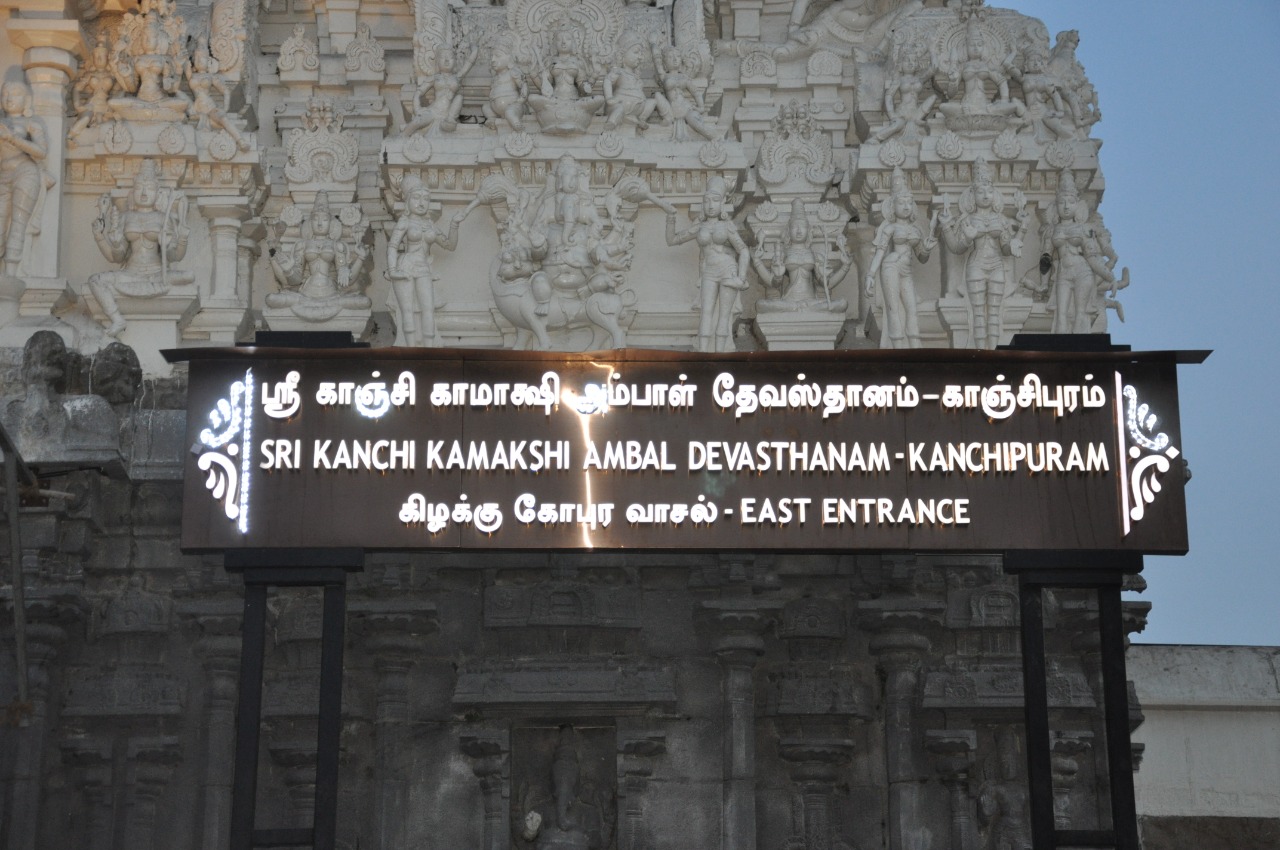
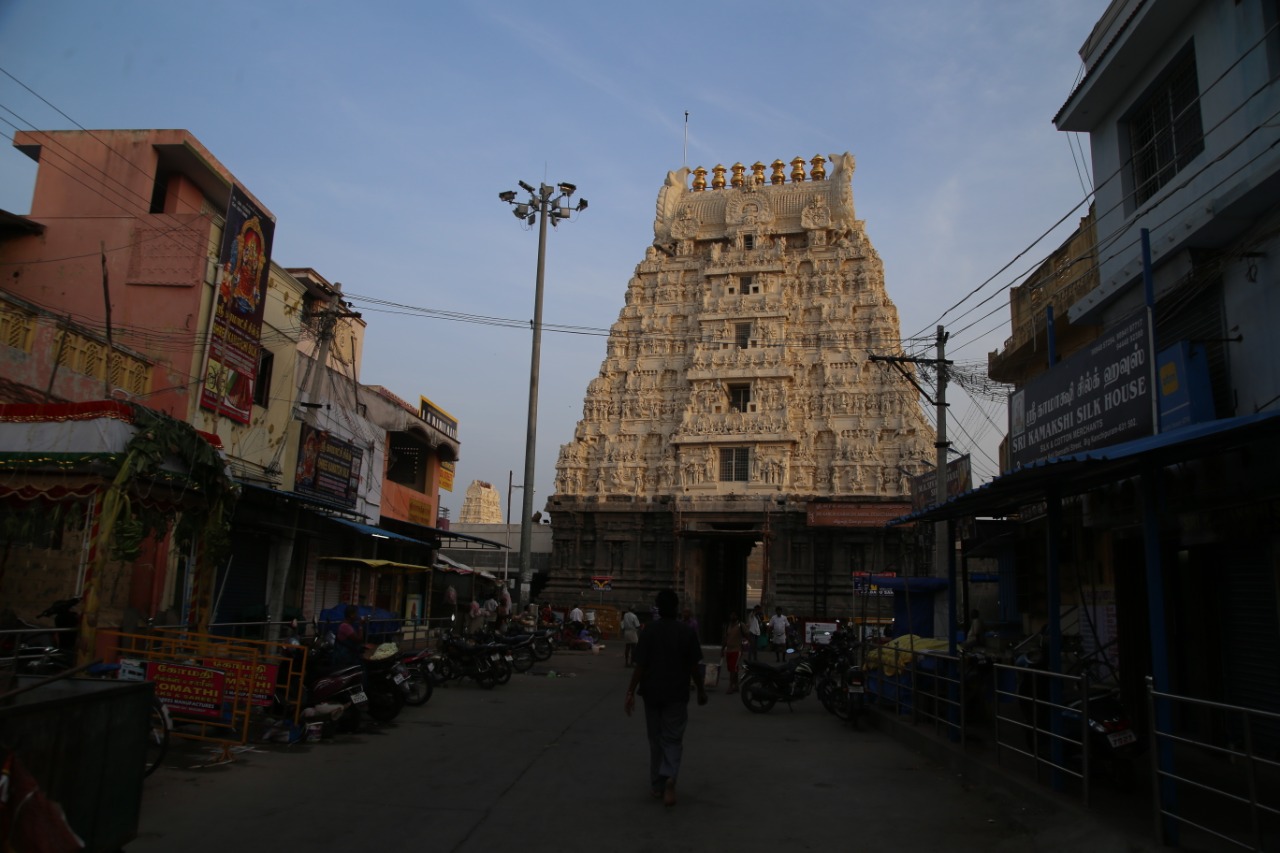
The Kamakshi Temple is an ancient Hindu Temple dedicated to Kamakshi, the ultimate Goddess Lalita Maha Tripura sundari. It is located in the historic city of Kanchipuram, near Chennai, India. The Meenakshi Temple in Madurai, the Akilandeswari temple in Thiruvanaikaval near Tiruchirappalli and this Kamakshi temple are the important centers of worship of Goddess, in the state of Tamil Nadu.
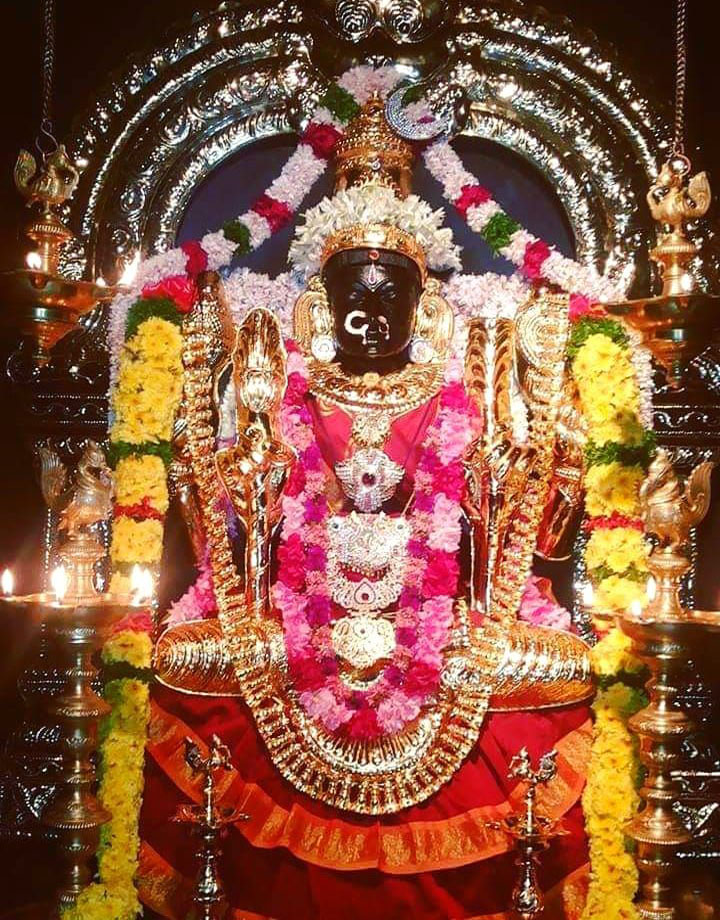
The Temple was most probably built by the Pallava kings, whose capital was Kanchipuram.The Image of the main Deity, Kamakshi, is seated in a majestic Padmasana, a yogic posture signifying peace and prosperity, instead of the traditional standing pose. Goddess holds a sugarcane bow and bunch of five flowers in the lower two of her arms and has a pasha (lasso), an ankusha (goad) in her upper two arms. There is also a parrot perched near the flower bunch. There are no other Goddess temples in the city of Kanchipuram, apart from this temple, which is unusual in a traditional city that has hundreds of traditional temples.
There are various legends that account for this fact.According to a local legend, Adi Shankaracharya established the Sri Chakra in this Kamakshi Devi temple in the trough-like structure in that shrine.
.jpg)
As per Hindu scriptures, Kamakshi Amman is considered in line with Meenakshi at Madurai and Visalakshi at Varanasi. Kamakshi is the only Shakti shrine centered across all Shiva temples in Kanchipuram which do not have separate shrines for Amman. Kamakshi is worshipped thus as Parabrahma Swaroopini. She is none other than Lalitha Maha Tripura Sundari herself. This can be further supported in tantric texts such as Tripura Rahasya, Bahvrucha Upanishad and most importantly, Brahmanda Purana which discusses how Lalitha Devi resides in Kamakoti Peetha in Kanchi.
Architecture
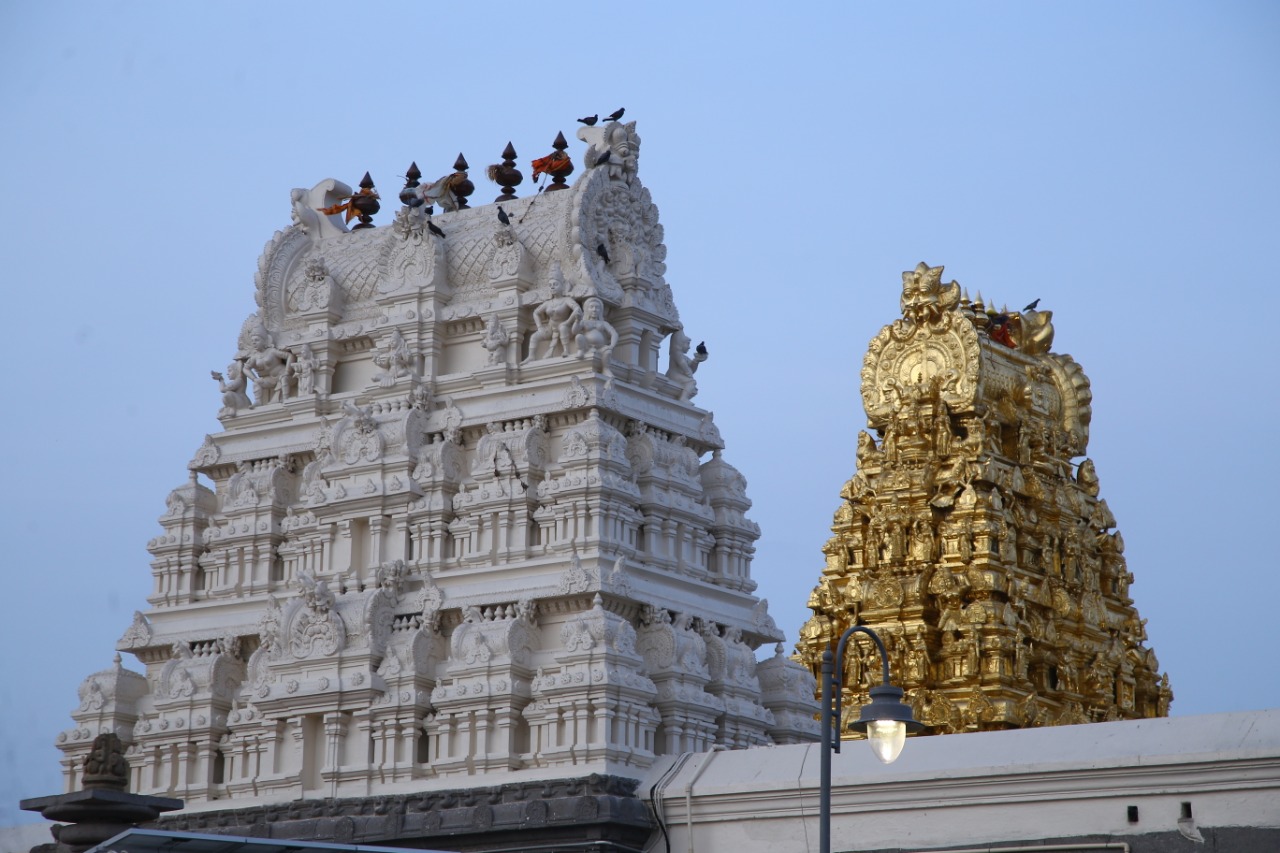
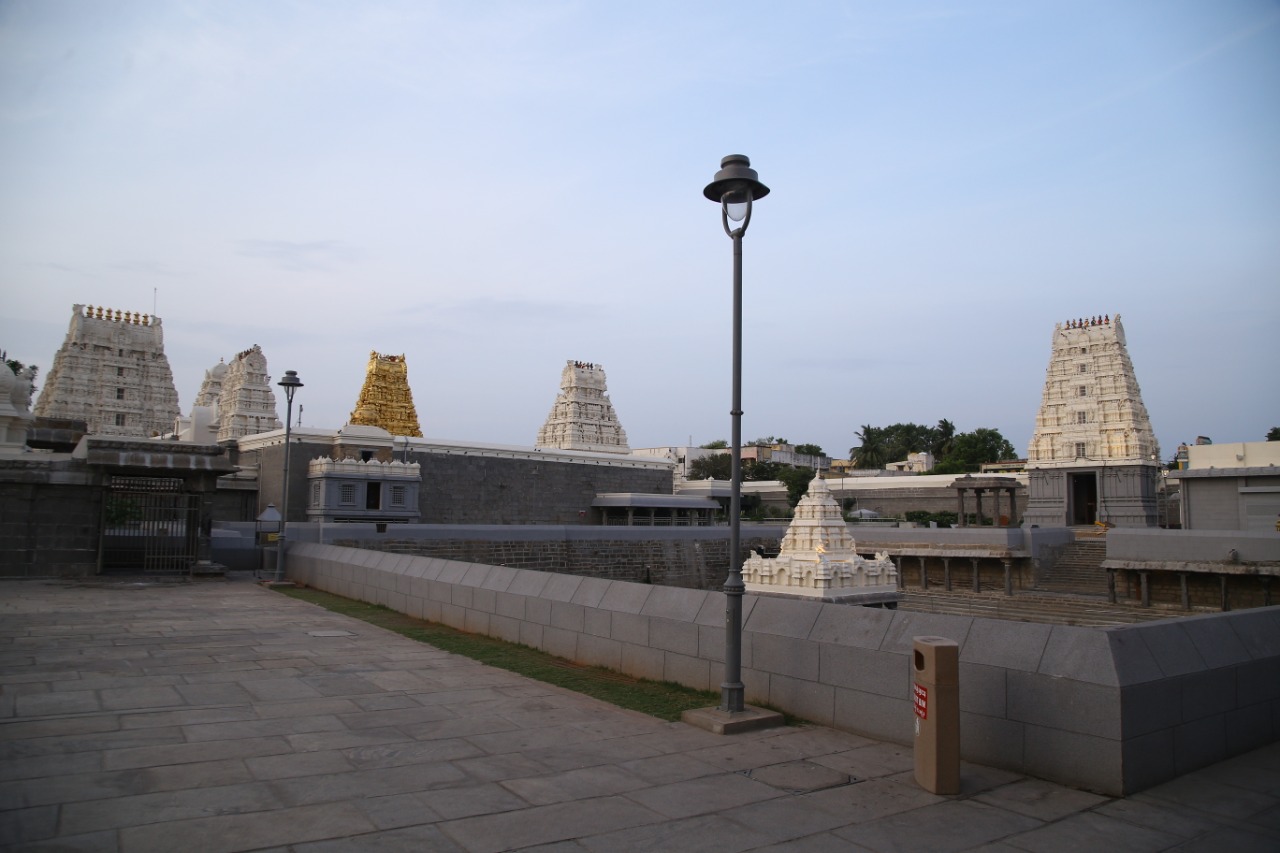
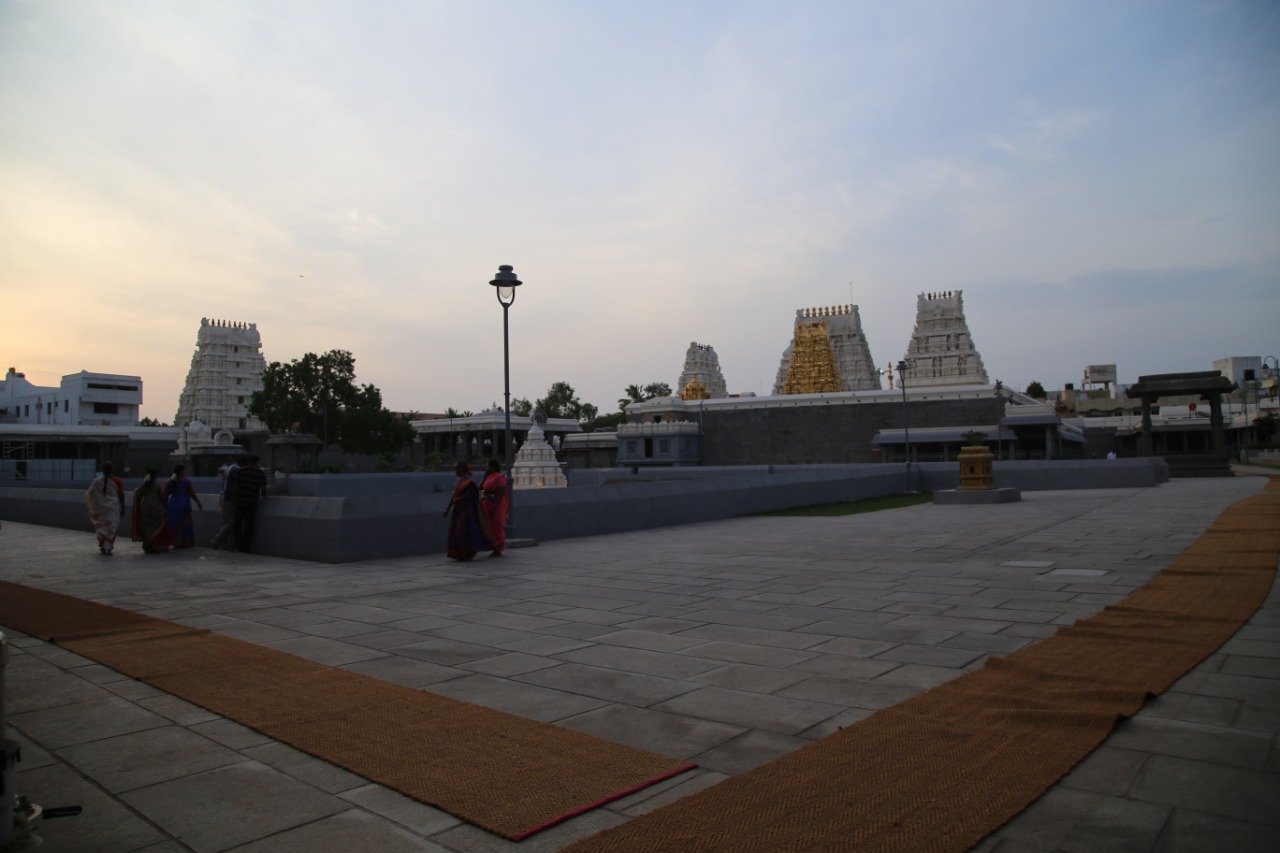
The temple occupies an area of 5 acres (2.0 ha). The sanctum houses the image of Kamakshi in seated posture and is flanked by the trinity of Shiva, Vishnu and Brahma. There are smaller shrines of Bangaru Kamakshi, Adi Shankara and Maha Saraswathi around the sanctum. The picture provides a glimpse view of Temple Pond and Gaja Shed. Everyday the temple rituals start with Go Pooja and Gaja Pooja. There is a separate shed with Elephants, which performs pooja to the deity by trumpeting every day early morning 5.AM.
In front of the Grabagraha there is a Gayatri Mandapam to the right of the shire we can see the deities arupa lakshmi, swaropa lakshmi. The temple is maintained and administered by the Hindu Religious and Charitable Endowments Department of the Government of Tamil Nadu. The Devi in Adi Kamakshi temple which is close by the present Kamakshi temple, is called by various names like Kirtimati, Devagarbha in extant Tantric works like Tantrachudamani. She has four hands containing in each of them respectively, Ankusa, Pasa, Abhaya and a Kapala. This description corresponds to those extant old tantric works.
Kamakshi as Lalitha Maha Tripura Sundari
Shri Lalita Parabhattarika presides over the Kamakoshtha in five forms:
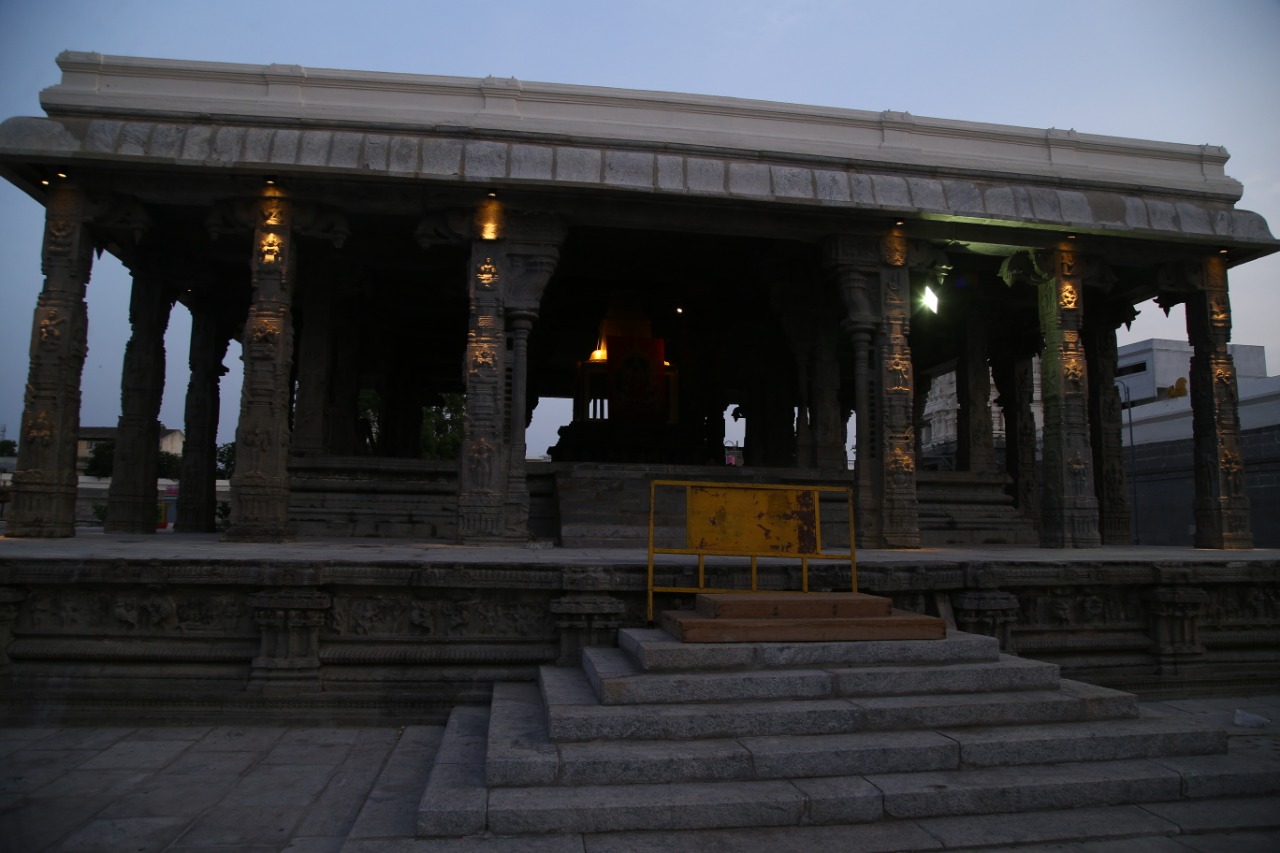
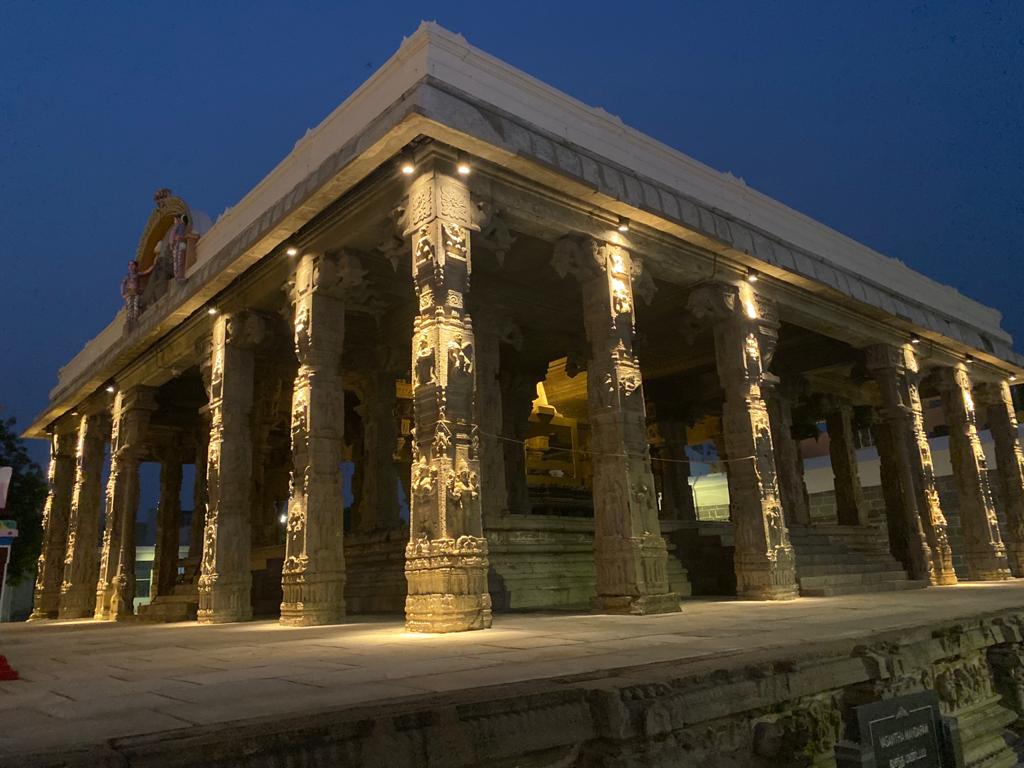
1. Shri Kamakshi Para Bhattarika – Sri Kamakshi is the mula devata of the Kamakoti Peetha seated in the centre of the inner sanctorum of the shrine in Kanchipuram known as the Gayatri mantapam. According to kamakshi rahasya, this mandapa was built by the celestials with the four walls representing the four Vedas and the twenty-four pillars representing the twenty-four syllables of the sacred formula of gayatri. Shrividya Parameshvari, who forms the inner core of the prakata gayatri and thus called rahasya gayatrI, is enshrined at the centre of the gayatri mandapam as Shri Kamakshi. She is seated on pancha brahmasana and sports in her four hands pasha, ankusha, iskhu kodanda and pushpa bana. Paramba is seated in yonyasana and faces southeast. When tormented by asuras led by Bhandasura, devas are said to have performed a penance to appease the Supreme Shakti in the form of parrots, residing on champaka vrkshas at Kanchi. Pleased with their penance, Paramba is said to have appeared from her residence in Mahameru or Bilakasha through the bila dvara and destroyed the demons. The shri vigraha of Paramba has been described as representing her three forms: sthula (Dhyana yogya, Savayava), Sukshma (mantra and yantratmaka) and Karana or Vasanatmaka. It is also said that Lord Mahadeva himself worshipped paramba in the four yugas assuming the forms of sages krodha bhattaraka, parashurama, dhaumya and Adi shankara bhagavatpada (and muka shankara, believed to be an incarnation of krodha bhattaraka). The bila dvara leading to bilakasha can be seen today in front of the tapomagna kamakshI sannidhi inside the garbhagrha. It is also said that bhagavan rudra assumed the form of durvasas on her emergence from the bilakasha and first worshipped her through the modalities of shrividya tantra by consecrating a shrichakra here. He is thus the sampradaya guru of shrividya and the credit for crystallizing paramba at Kanchipuram as Gurumurtisvarupini (Charyanandanatha-para bhattarika mithunatmika) goes to this great seer. The forms of vashinyadi Vagdevatas can be seen around the Shrichakra in their same positions as in Shripura. A shrine dedicated to hayagrIva and agastya can be seen in the third prakara of the temple, at the location where the teaching of Lalita Trishati was imparted.
2. Tapah Kamakshi – This form of paramba can be seen to the right of the mula devata and close to the bila dvara. Separated from mahadeva, uma appeared first as annapurna in Kashi and then following the advice of sage Katyayana, appeared in Kanchi to worship Ekamranatha under the mango tree in rudrakoshtha and married him.
3. Anjana Kamakshi – Also known as Arupa , her shrine is situated to the left of the mula devata, facing the north and in front of saubhagya ganapati. Rama is said to have performed a penance to regain her lost beauty in this place and due to the grace of paramba, kumkuma offerings of mula devata is offered to her here before being accepted by the devotees. While she represents Rama in her form as rama-bija, she represents Kamakshi in the form of Kamakalakshara that is inherent in the rama bIja.
4. Svarna Kamakshi – The shrine of this deity, also known as Bangaru Kamakshi is situated in the second prakara. It is said that this form was created by Shrividya parameshvari from her third eye to serve as the shakti of ekamranatha named ekambika. The original idol that appeared from the third-eye of paramba is seen today in Tanjore, which was transported to Tanjore to protect the idol from Muslim attacks by Kamakshidasa, an ancestor of Shri Shyama Shastrigal.
5. Utsava Kamakshi – The shrine of Utasava Kamakshi, the idol which is brought out during processions, is located in the second prakara. The idol is accompanied on either side by idols of Sharada and Rama. While the devatas generally are accompanied by their male/female consorts in most cases, on account of Kamakshi being Shiva-shaktyatmika, there is no shrine devoted to Shiva here.
Sri Lalitambika, who appeared from Chidagni for the destruction of Bhandasura, was presented to the world by Brahma with the special name – Sri Kamakshi. Thus, ‘Kamakshi’ is the special epithet of the primordial Parashakti Sri Lalita. As she brings joy to the mind of Sri Kameshwara, she is referred to as ‘Sri Lalita’.
Durvasa Maharishi

The story goes that Kamakshi Amma prayed while standing on one foot on a needlepoint to get married to Shiva. Her wish came true and they were married in the month of Phalgun in the Uttara Nakshatra. There used to be an image of Kamakshi in Gold in a standing pose as she prayed called Bangaru Kamakshi. It was shifted to Thanjavur when an attack on the temple was expected. The image is still in Thanjavur.
Rishi Durvasa prayed here after he was cursed. Once he overcame the curse by worshipping Kamakshi, he installed the Sri Chakra here. He also wrote down Saubhagya Chintamani Kalpa also called Durvasa Samhita. In this text, he laid down the detailed Vidhi, or the way to worship Kamakshi. Even today the worship is done exactly as he has written in his text Saubhagya Chintamani.
Priests of 7 Gotras can worship at Kanchi Kamakshi temple. However, only two gotras worship here, and the rest worship at Kamakshi temple in Thanjavur. Priests here are called Shastri’s.
Meera Subramanian says,
The temple architecture and spiritual energy are amazing. Felt deeply connected.
Lakshmi Narayan says,
Every visit brings inner peace and strength. Jai Shri Ram ????
Suresh Kumar says,
The divine presence here is very powerful. A truly holy Swayambhu temple
Kavya Nair says,
Such a serene and spiritually uplifting temple. Felt calm and blessed.
Arjun Patel says,
A sacred place filled with devotion and history. Highly recommend visiting with family
Ananya Reddy says,
Blessed to have darshan here. The vibrations and positivity are beyond words.
Priya Iyer says,
An unforgettable spiritual experience. The atmosphere is so pure and peaceful.
Rahul Sharma says,
Felt divine energy as soon as I entered the temple. Truly a powerful Swayambhu kshetra. ????
| Friday | 5:30am–12pm, 4–8pm |
| Saturday | 5:30am–12pm, 4–8pm |
| Sunday | 5:30am–12pm, 4–8pm |
| Monday | 5:30am–12pm, 4–8pm |
| Tuesday | 5:30am–12pm, 4–8pm |
| Wednesday | 5:30am–12pm, 4–8pm |
| Thursday | 5:30am–12pm, 4–8pm |
Kamakshi Amman Sannathi St, Kanchipuram, Tamil Nadu 631502
Contact Number
Explore spiritual insights, reviews, and divine writings shared by our esteemed Priests & Guides.
Sri Ramananda shares the importance of morning poojas for spiritual awakening.

Guru Venkatesh explains how daily mantra chanting transforms mental and spiritual well-being.



 {
function getPrintBaseHref() {
var pathParts = window.location.pathname.split('/');
pathParts.pop();
return window.location.origin + pathParts.join('/') + '/';
}
function initPrint() {
var printBtn = document.getElementById('printBtn');
var printArea = document.getElementById('printArea');
if (!printBtn || !printArea) {
return;
}
printBtn.addEventListener('click', function (e) {
e.preventDefault();
var printContents = printArea.innerHTML;
var printWindow = window.open('', '_blank', 'width=900,height=650');
if (!printWindow) {
alert('Please allow popups to print.');
return;
}
var baseHref = getPrintBaseHref();
var watermarkStyle = '<style type=) ' +
'.print-watermark{position:fixed;top:0;left:0;width:100%;height:100%;' +
'display:flex;align-items:center;justify-content:center;pointer-events:none;' +
'z-index:1;opacity:0.12;font-size:120px;font-weight:bold;color:#000;' +
'font-family:Arial,sans-serif;transform:rotate(-25deg);-webkit-print-color-adjust:exact;print-color-adjust:exact;}' +
'.print-content-wrap{position:relative;z-index:2;}' +
'';
var watermarkHtml = '
' +
'.print-watermark{position:fixed;top:0;left:0;width:100%;height:100%;' +
'display:flex;align-items:center;justify-content:center;pointer-events:none;' +
'z-index:1;opacity:0.12;font-size:120px;font-weight:bold;color:#000;' +
'font-family:Arial,sans-serif;transform:rotate(-25deg);-webkit-print-color-adjust:exact;print-color-adjust:exact;}' +
'.print-content-wrap{position:relative;z-index:2;}' +
'';
var watermarkHtml = '

Leave a Comment