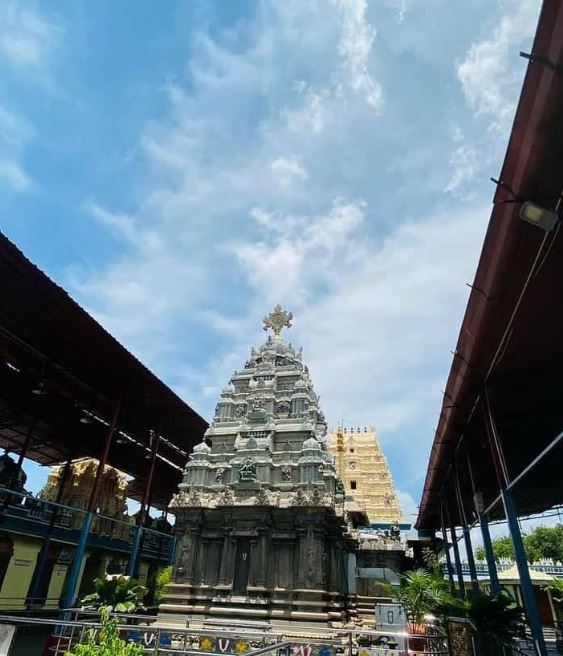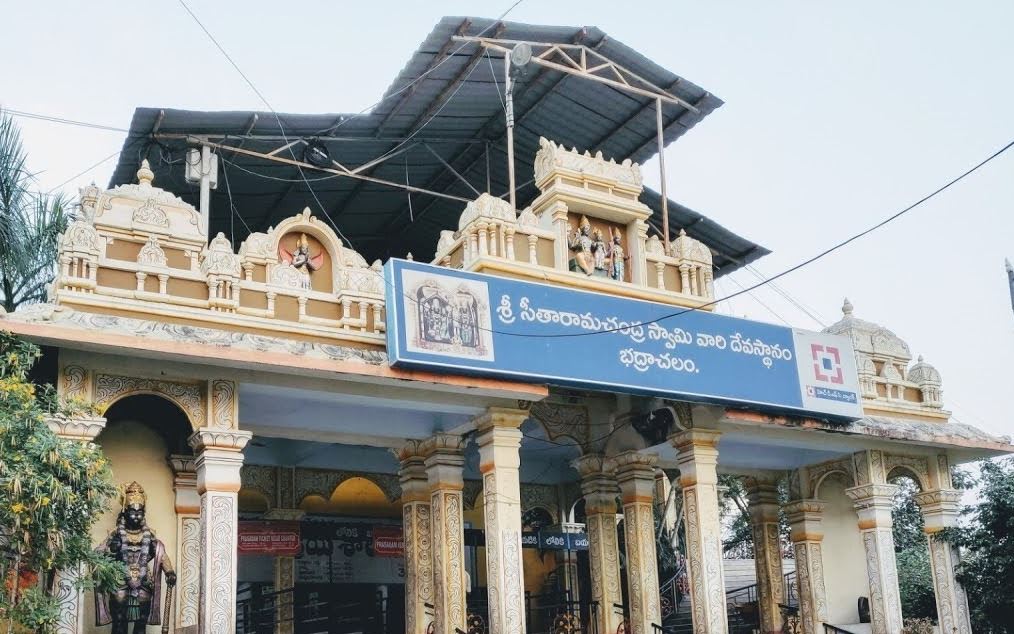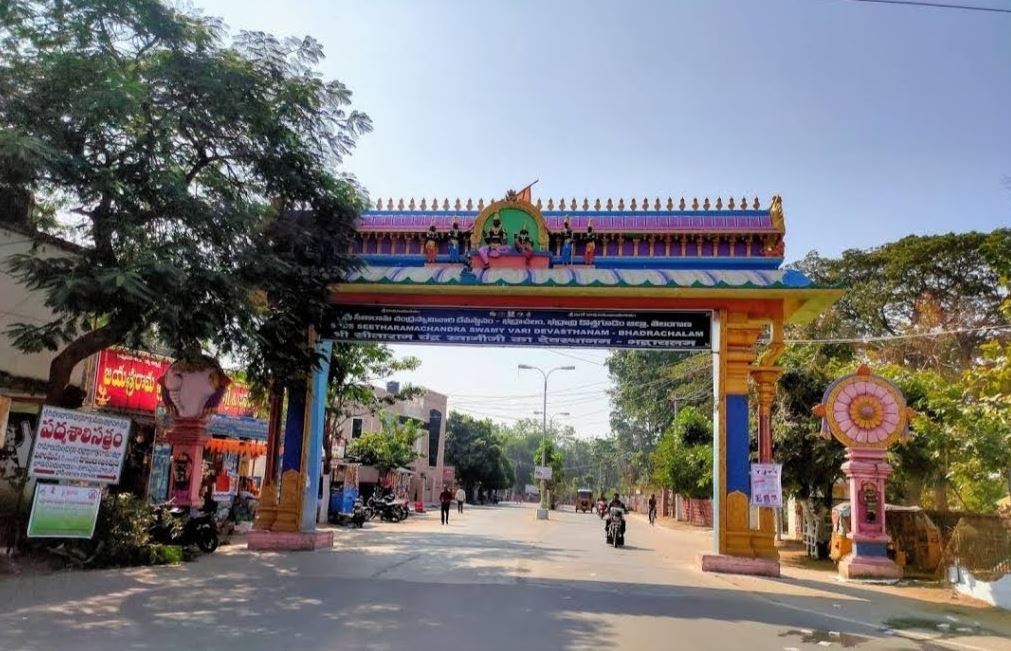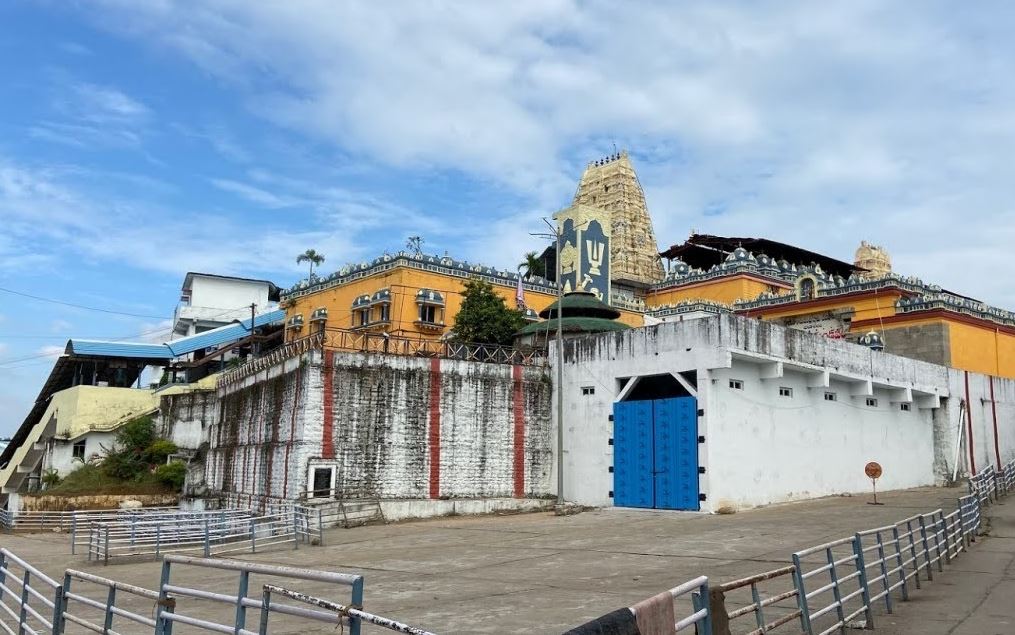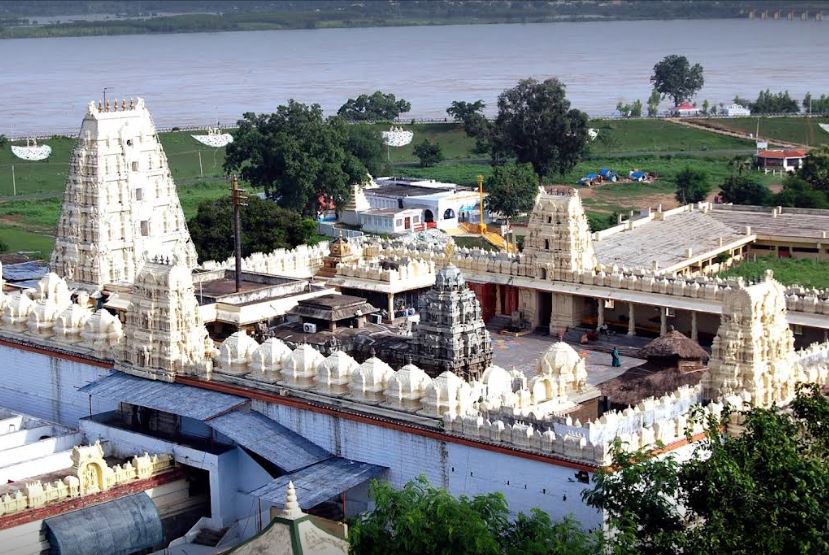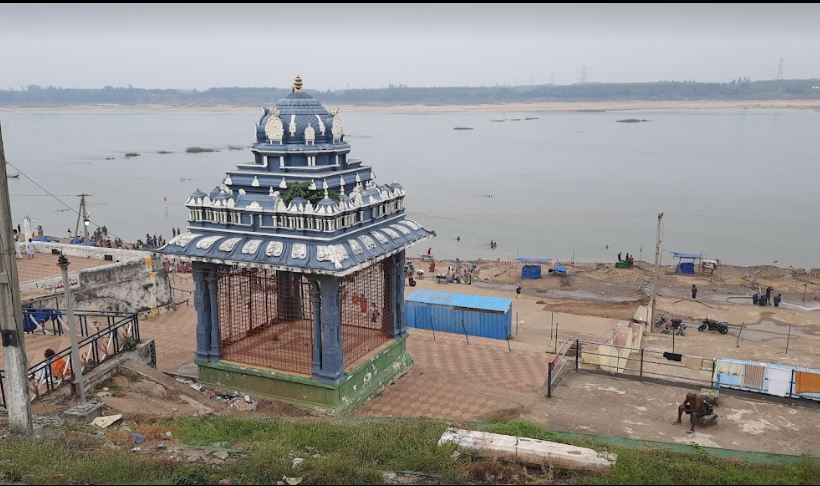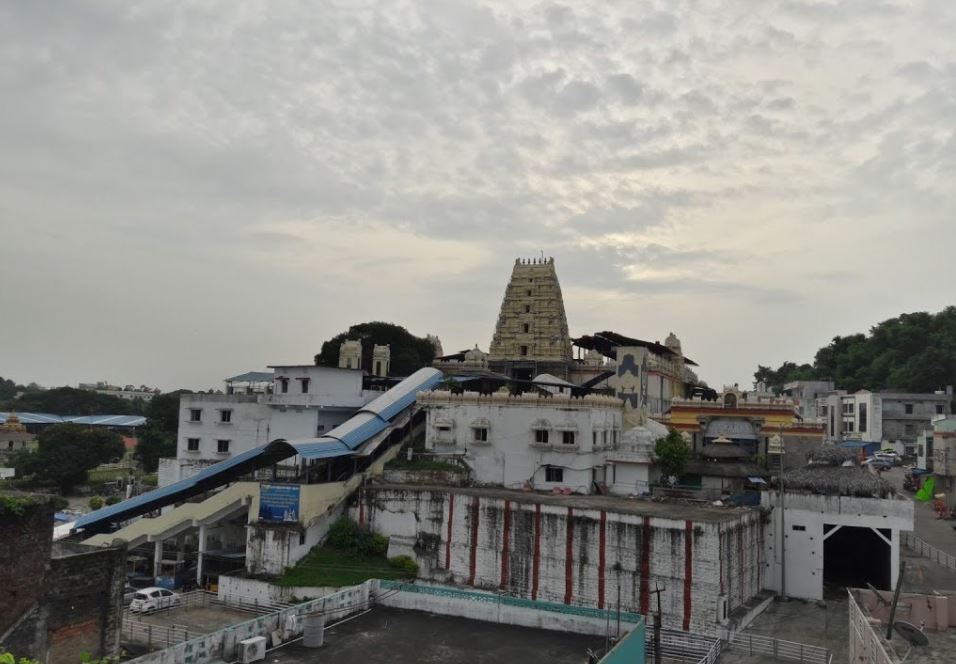
Bhadrachalam is a census town in Bhadradri Kothagudem district in the Indian state of Telangana.It is an important Hindu pilgrimage town with the Bhadrachalam Temple of Lord Rama, situated on the banks of Godavari river. It is located 312 kilometres (194 mi) east of state capital, Hyderabad,115 kilometres (71 mi) from Khammam,192 kilometres (119 mi) from Vijayawada,177 kilometres (110 mi) from Suryapet, 180 kilometres (112 mi) from Warangal, 220 kilometres (137 mi) from the Andhra Pradesh state capital Amaravathi and 350 kilometres (217 mi) from Visakhapatnam.
Bhadrachalam is a key town of Pilgrimage importance located in the Khammam District of Telangana. The temple town of Bhadrachalam is situated on the banks of Godavari River. It was part of East Godavari District, Andhra Pradesh till 1959. The town is synonymous for its famous temple devoted to Lord Rama. Bhadrachalam Revenue division is considered one of the largest revenue divisions in the country, which was transferred to Khammam district of Telangana region for administrative purposes.
According to history, Paleolithic man had roamed the areas, which is called the lower Godavari valley that includes Bhadrachalam and its surroundings. Bhadrachalam town has a clearly documented history of Lord Sri Rama temple, which was constructed in the 17th Century CE. According to Mythology, the present town was once part of the Dandakaranya forest, which Lord Sri Rama, Sita and Lakshmana had visited during their exile also called vanavasam according to local parlance. The jungle which is now in the vicinity of temple was the place for Rama’s retreat and a place called Parnasala which is 32 km away was the location where Rama had built a dwelling for himself and Sita. It was here that Sita was abducted by Lanka ruler, Ravana.
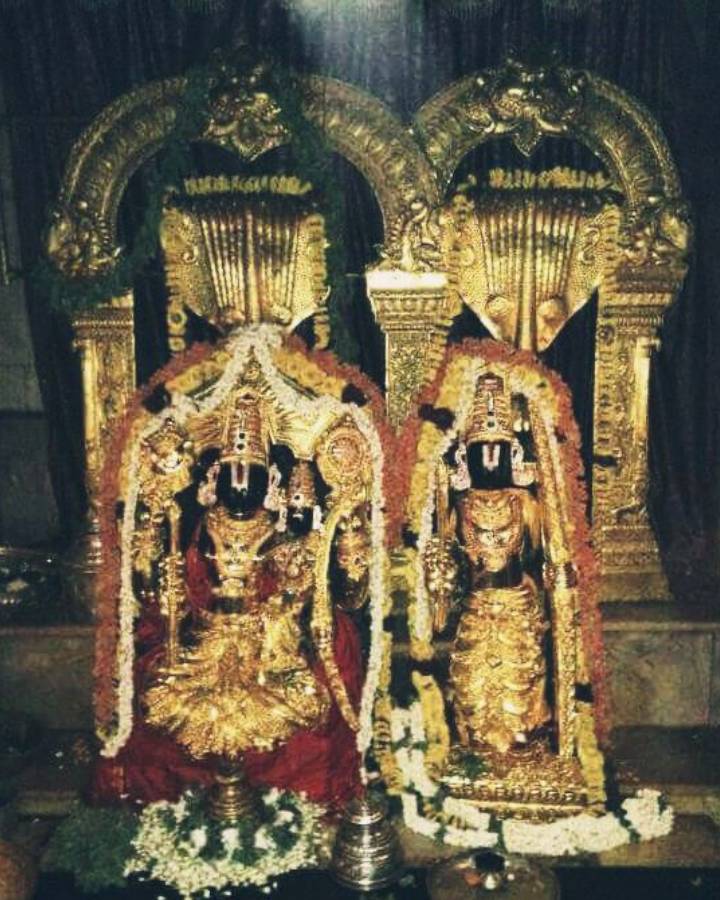
The town shares its historical significance with Ramayana Era. The name Bhadrachalam is derived from the word Bhadragiri (The Mountain Abode of Bhadra, the child of Meru and Menaka). The famous temple at Bhadrachalam is home to the Archa Murthy’s of Rama, Sita and Lakshmana and their idols are believed to be swayambhu i.e. self-manifested ones.
Bhadrachalam division also has several other Hindu temples. Parnasala is believed to be the spot where Rama constructed a hermitage during his exile and spent time with his wife Sita and brother Lakshmana. Agastya muni helped Rama select this spot. For the purpose of tourists, there is picturesque display of few scenes from vanavasa at Parnasala.
Pilgrims enthrall when they see the footprints of Sita devi, the mosaic of Maarecha who appears in the guise of golden deer and Ravana who appears in the form of Sanyasi for Bhikshatana. One can see Sita Vaagu where Sita had bathed and gathered turmeric and Kunkum from the nearby stones.
Yetapaka located 2 km from Bhadrachalam has a history where the bird Jatayuvu, an ardent devotee of Rama tried to obstruct Ravana when he was proceeding on a chariot after kidnapping Sita. A fierce batted ensued and a wing of the bird was believed to have found at Rekkapalli.
Rama is worshipped as Atmarama here at Dummugudem where according to Purana, Rama killed around 14,000 demons belonging to Khara and Dushana. The place is called Dummugudem as it was built on the ashes of these demons. At Gundala, located 5 km away from Bhadrachalam, once can see hot water springs after digging a pit on the riverbank and it is said that the divine trio of Brahma, Vishnu and Maheshwara dipped in the holy water here during winter season.
The temple in Bhadrachalam is closely connected with the life of the 17th-century saint composer Kancharla Gopanna who was known as Bhakta Ramadas. Gopanna was the Tahasildar of Bhadrachalam (second half of the 17th century), is said to have used money from the government treasury to build this temple, and was imprisoned in a dungeon at Golconda. Lord Rama is said to have miraculously given the Sultan the money spent by Gopanna, after which he was released. Gopanna then became Bhadrachala Ramadasa and went on to compose innumerable number of songs in Telugu in praise of Rama.
Bhadrachalam and Vijayanagara are sites said to have been closely associated with the Ramayana. Rama, Sita and Lakshmana are said to have stayed at Parnasala, 35 km away from Bhadrachalam. Rama is said to have crossed the river Godavari on his way to Sri Lanka to rescue Sita, at the spot where the Bhadrachalam temple stands, on the northern bank of the river. Legend has it that the son of Meru and Menaka, Bhadra, performed penances towards Rama here. Kabirdas, a Muslim by birth is also closely associated with this temple. It is believed that the images of the deities miraculously disappeared when Kabir was refused entry into the temple and that they reappeared miraculously upon his being permitted to enter.
Bhadrachalam attracts hundreds of thousands of devotees from all over the world. This hill place that is encircled by Holy River Godavari flowing towards southern direction is the famous shrine Bhadrachalam. The name is derived from Bhadragiri (Mountain of Bhadra: a boon child of Meru and Menaka). The history of this shrine stands for the significance of Ramayana Era, the coherent hill place existed in "Dandakaranya" of Ramayana period where Rama with his consort Sita and brother Lakshmana had spent their vanavasa. The vicinity of the temple had its incongruous mixture in another story which depicts the exigency of "Sri Mahavishnu" to manifest himself as Rama and shuffled again to the mortal coil — long after Ramavatara was to fulfill his promise to his Bhakta Bhadra (a mountain king), a sage who had been continuing the intense penance to get grace of Lord Rama.
The history depicts that the need emerged the incarnation of Vaikunta Rama was that to fulfill a long desire of his ardent devotee Bhadra. The Saint Bhadra performed penance at the bank of river Godavari in Dandakaranya to get grace of lord Rama and in countenance of his beloved God. The exulted sage implored Rama to be seated on his head, but Rama who was in search of his consort Sita gave promise to his Bhakta that his desire would be fulfilled on his way back, after finding Sita and accomplishing the process of punishing the wicked Ravana and establish ‘Dharma’. Thus the sage had been in continuation of the frightened penance, as Rama could not accomplish the promise in Ramavatara. Then Sri Mahavishnu manifested himself as Vaikunta Rama and rushed to his devotee Bhadra, signaling his arrival by blowing 'Shanku', accompanied by his consort Sita and brother Laxmana, resembling that of 'Gajendra Moksham.' Thus, the deities of Rama (having four hands) — Shanku on the right, Chakra at his left and Dhanurbhana (Bow and Arrow in the other two hands) — Sita had condescended on the left lap of Rama and brother (at Ram’s left) are. And the hill place where the Deities were seated was the head place of Bhadra - Achala (immovable, i.e., hill), thus this shrine was transformed into Bhadrachalam.
Pokala Dhammakka found the deities of Vaikunta Rama, Laxmana and Sita. She was an ardent devotee of Rama lived in the 17th century was inhabitant of Bhadrireddypalem, a mile away from this holy place. One night, she had darshan of Rama in her dream and was told by lord Rama “the saints and sages are worshiping my embodied deity settled on Bhadragiri” and asked her to trace them, perform pooja and attain salvation. On the very next day morning she started searching for the deities - peeped into an anthill and found the deities hidden in it. She poured hundreds of pots of Godavari water on the anthill, which tardily dissolved and gave way to appear the hidden Deities. Since then, she used to perform pooja daily and offer 'nivedyam' with fruits fallen from near palmyra tree and constructed a mandapam with the help of local villagers.
Meera Subramanian says,
The temple architecture and spiritual energy are amazing. Felt deeply connected.
Lakshmi Narayan says,
Every visit brings inner peace and strength. Jai Shri Ram ????
Suresh Kumar says,
The divine presence here is very powerful. A truly holy Swayambhu temple
Kavya Nair says,
Such a serene and spiritually uplifting temple. Felt calm and blessed.
Arjun Patel says,
A sacred place filled with devotion and history. Highly recommend visiting with family
Ananya Reddy says,
Blessed to have darshan here. The vibrations and positivity are beyond words.
Priya Iyer says,
An unforgettable spiritual experience. The atmosphere is so pure and peaceful.
Rahul Sharma says,
Felt divine energy as soon as I entered the temple. Truly a powerful Swayambhu kshetra. ????
Bhadrachalam temple darshan timings · Morning Hours: 5:00 am to 12:00 pm · Afternoon Hours: 3:00 pm to 6:00 pm · Evening Hours: 6:30 pm to 9:00 pm.
6: 3:00 pm to 6:00 pm , 3: 5:00 am to 12:00 pm , 9: 9:30 pm , 1: 4:00 am
Bhadrachalam, Telangana 507111
087432 32467
Explore spiritual insights, reviews, and divine writings shared by our esteemed Priests & Guides.
Sri Ramananda shares the importance of morning poojas for spiritual awakening.
Guru Venkatesh explains how daily mantra chanting transforms mental and spiritual well-being.
Lord Sri Rama temple constructed circa 17th century CE by Kancherla Gopanna.The famous temple at Bhadrachalam is home to the Archa Murthy's of Rama, Sita and Lakshmana and their idols are believed to be swayambhu i.e. self-manifested ones. Bhadrachalam division also has several other Hindu temples.
Bhadrachalam is a census town in Bhadradri Kothagudem district in the Indian state of Telangana.It is an important Hindu pilgrimage town with the Bhadrachalam Temple of Lord Rama, situated on the banks of Godavari river. It is located 312 kilometres (194 mi) east of state capital, Hyderabad,115 kilometres (71 mi) from Khammam,192 kilometres (119 mi) from Vijayawada,177 kilometres (110 mi) from Suryapet, 180 kilometres (112 mi) from Warangal, 220 kilometres (137 mi) from the Andhra Pradesh state capital Amaravathi and 350 kilometres (217 mi) from Visakhapatnam.
Bhadrachalam is a key town of Pilgrimage importance located in the Khammam District of Telangana. The temple town of Bhadrachalam is situated on the banks of Godavari River. It was part of East Godavari District, Andhra Pradesh till 1959. The town is synonymous for its famous temple devoted to Lord Rama. Bhadrachalam Revenue division is considered one of the largest revenue divisions in the country, which was transferred to Khammam district of Telangana region for administrative purposes.
According to history, Paleolithic man had roamed the areas, which is called the lower Godavari valley that includes Bhadrachalam and its surroundings. Bhadrachalam town has a clearly documented history of Lord Sri Rama temple, which was constructed in the 17th Century CE. According to Mythology, the present town was once part of the Dandakaranya forest, which Lord Sri Rama, Sita and Lakshmana had visited during their exile also called vanavasam according to local parlance. The jungle which is now in the vicinity of temple was the place for Rama’s retreat and a place called Parnasala which is 32 km away was the location where Rama had built a dwelling for himself and Sita. It was here that Sita was abducted by Lanka ruler, Ravana.
The town shares its historical significance with Ramayana Era. The name Bhadrachalam is derived from the word Bhadragiri (The Mountain Abode of Bhadra, the child of Meru and Menaka). The famous temple at Bhadrachalam is home to the Archa Murthy’s of Rama, Sita and Lakshmana and their idols are believed to be swayambhu i.e. self-manifested ones.
Bhadrachalam division also has several other Hindu temples. Parnasala is believed to be the spot where Rama constructed a hermitage during his exile and spent time with his wife Sita and brother Lakshmana. Agastya muni helped Rama select this spot. For the purpose of tourists, there is picturesque display of few scenes from vanavasa at Parnasala.
Pilgrims enthrall when they see the footprints of Sita devi, the mosaic of Maarecha who appears in the guise of golden deer and Ravana who appears in the form of Sanyasi for Bhikshatana. One can see Sita Vaagu where Sita had bathed and gathered turmeric and Kunkum from the nearby stones.
Yetapaka located 2 km from Bhadrachalam has a history where the bird Jatayuvu, an ardent devotee of Rama tried to obstruct Ravana when he was proceeding on a chariot after kidnapping Sita. A fierce batted ensued and a wing of the bird was believed to have found at Rekkapalli.
Rama is worshipped as Atmarama here at Dummugudem where according to Purana, Rama killed around 14,000 demons belonging to Khara and Dushana. The place is called Dummugudem as it was built on the ashes of these demons. At Gundala, located 5 km away from Bhadrachalam, once can see hot water springs after digging a pit on the riverbank and it is said that the divine trio of Brahma, Vishnu and Maheshwara dipped in the holy water here during winter season.
Information not available.
The temple in Bhadrachalam is closely connected with the life of the 17th-century saint composer Kancharla Gopanna who was known as Bhakta Ramadas. Gopanna was the Tahasildar of Bhadrachalam (second half of the 17th century), is said to have used money from the government treasury to build this temple, and was imprisoned in a dungeon at Golconda. Lord Rama is said to have miraculously given the Sultan the money spent by Gopanna, after which he was released. Gopanna then became Bhadrachala Ramadasa and went on to compose innumerable number of songs in Telugu in praise of Rama.
Bhadrachalam and Vijayanagara are sites said to have been closely associated with the Ramayana. Rama, Sita and Lakshmana are said to have stayed at Parnasala, 35 km away from Bhadrachalam. Rama is said to have crossed the river Godavari on his way to Sri Lanka to rescue Sita, at the spot where the Bhadrachalam temple stands, on the northern bank of the river. Legend has it that the son of Meru and Menaka, Bhadra, performed penances towards Rama here. Kabirdas, a Muslim by birth is also closely associated with this temple. It is believed that the images of the deities miraculously disappeared when Kabir was refused entry into the temple and that they reappeared miraculously upon his being permitted to enter.
Bhadrachalam attracts hundreds of thousands of devotees from all over the world. This hill place that is encircled by Holy River Godavari flowing towards southern direction is the famous shrine Bhadrachalam. The name is derived from Bhadragiri (Mountain of Bhadra: a boon child of Meru and Menaka). The history of this shrine stands for the significance of Ramayana Era, the coherent hill place existed in "Dandakaranya" of Ramayana period where Rama with his consort Sita and brother Lakshmana had spent their vanavasa. The vicinity of the temple had its incongruous mixture in another story which depicts the exigency of "Sri Mahavishnu" to manifest himself as Rama and shuffled again to the mortal coil — long after Ramavatara was to fulfill his promise to his Bhakta Bhadra (a mountain king), a sage who had been continuing the intense penance to get grace of Lord Rama.
The history depicts that the need emerged the incarnation of Vaikunta Rama was that to fulfill a long desire of his ardent devotee Bhadra. The Saint Bhadra performed penance at the bank of river Godavari in Dandakaranya to get grace of lord Rama and in countenance of his beloved God. The exulted sage implored Rama to be seated on his head, but Rama who was in search of his consort Sita gave promise to his Bhakta that his desire would be fulfilled on his way back, after finding Sita and accomplishing the process of punishing the wicked Ravana and establish ‘Dharma’. Thus the sage had been in continuation of the frightened penance, as Rama could not accomplish the promise in Ramavatara. Then Sri Mahavishnu manifested himself as Vaikunta Rama and rushed to his devotee Bhadra, signaling his arrival by blowing 'Shanku', accompanied by his consort Sita and brother Laxmana, resembling that of 'Gajendra Moksham.' Thus, the deities of Rama (having four hands) — Shanku on the right, Chakra at his left and Dhanurbhana (Bow and Arrow in the other two hands) — Sita had condescended on the left lap of Rama and brother (at Ram’s left) are. And the hill place where the Deities were seated was the head place of Bhadra - Achala (immovable, i.e., hill), thus this shrine was transformed into Bhadrachalam.
Pokala Dhammakka found the deities of Vaikunta Rama, Laxmana and Sita. She was an ardent devotee of Rama lived in the 17th century was inhabitant of Bhadrireddypalem, a mile away from this holy place. One night, she had darshan of Rama in her dream and was told by lord Rama “the saints and sages are worshiping my embodied deity settled on Bhadragiri” and asked her to trace them, perform pooja and attain salvation. On the very next day morning she started searching for the deities - peeped into an anthill and found the deities hidden in it. She poured hundreds of pots of Godavari water on the anthill, which tardily dissolved and gave way to appear the hidden Deities. Since then, she used to perform pooja daily and offer 'nivedyam' with fruits fallen from near palmyra tree and constructed a mandapam with the help of local villagers.
Lord Sri Rama temple constructed circa 17th century CE by Kancherla Gopanna.The famous temple at Bhadrachalam is home to the Archa Murthy's of Rama, Sita and Lakshmana and their idols are believed to be swayambhu i.e. self-manifested ones. Bhadrachalam division also has several other Hindu temples.
Information not available.
Bhadrachalam temple darshan timings · Morning Hours: 5:00 am to 12:00 pm · Afternoon Hours: 3:00 pm to 6:00 pm · Evening Hours: 6:30 pm to 9:00 pm.
6: 3:00 pm to 6:00 pm , 3: 5:00 am to 12:00 pm , 9: 9:30 pm , 1: 4:00 am
Bhadrachalam, Telangana 507111
087432 32467
, 41655, TG, IN


Leave a Comment