
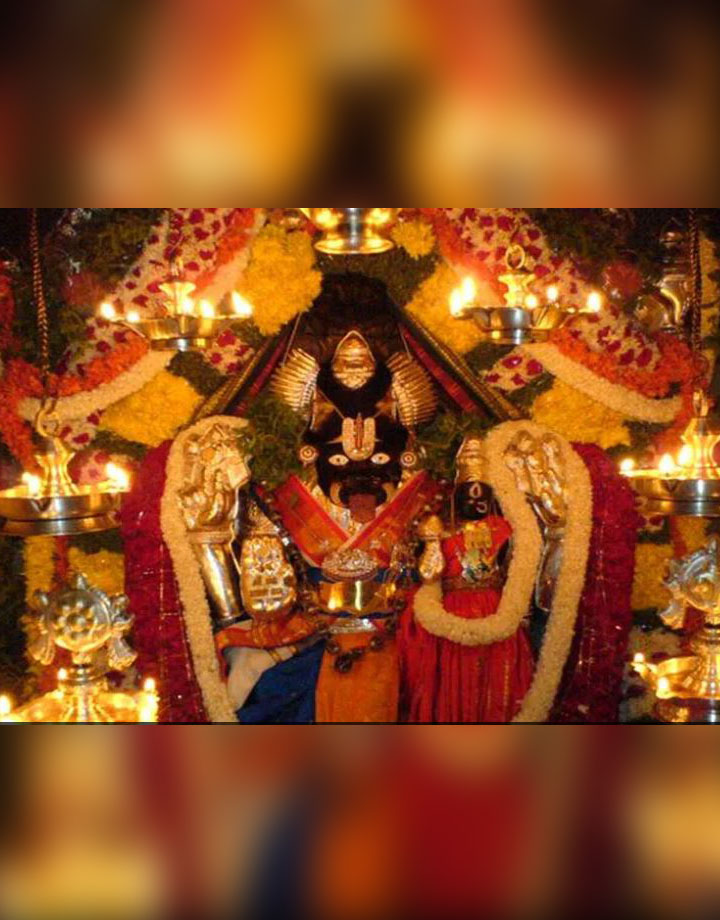
Kadiri Lakshmi Narasimha Swamy Temple is an ancient temple situated in Kadri, Anantapur. Narasimha Swamy is the presiding deity in this temple. Lord Narasimha Swamy is Swayambhu who emerged from Khadri tree roots
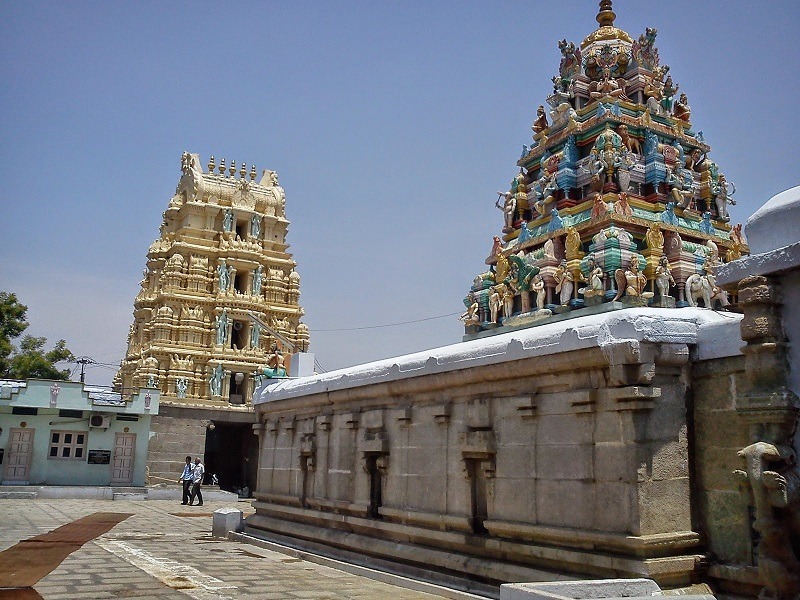
At a distance of 1.5 km Kadiri Railway Station, 100 km from Anantapur, 113 km from Kadapa, 458 km from Hyderabad, 476 km from Vijayawada, and 174 km from Bangalore, Sri Kadiri Lakshmi Narasimha Swamy Temple is located in Kadiri town in Anantapur District of Andhra Pradesh. The temple is dedicated to Lord Narasimha, a Man-lion form and is one of the 10 avatars of Lord Vishnu.
Lord Narasimha in this temple is swayambhu emerging from the roots of Khadri tree (Indian mulberry). The specialty of this temple is that after the daily Abhishekam is performed, the idol of Lord Lakshmi Narasimha oozes sweat continuously even after repeatedly wiping off sweat by the temple priests.
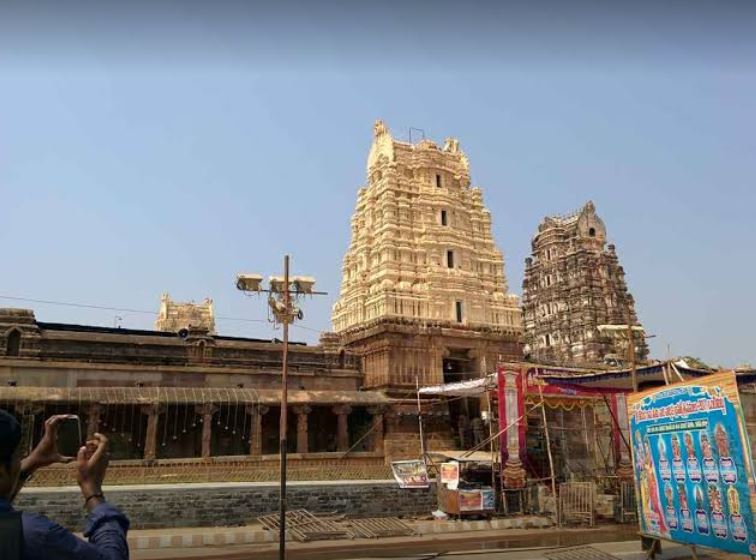
The construction of this temple is said to have been commenced during the Western Chalukya rule but it was completed during the time of Vijayanagara rulers. The inscriptions in the temple relate mostly to the Vijayanagar period. One of them states that the temple was built by a Nayaka during the reign of Bukka I in 1332 AD. The raja gopuram was built by Harihararaya. The popular king of Vijayanagara Sri Krishna Devaraya and Maharashtra King Shivaji visited this famous temple and constructed sub temples and Mahishasuramardini Temple respectively.
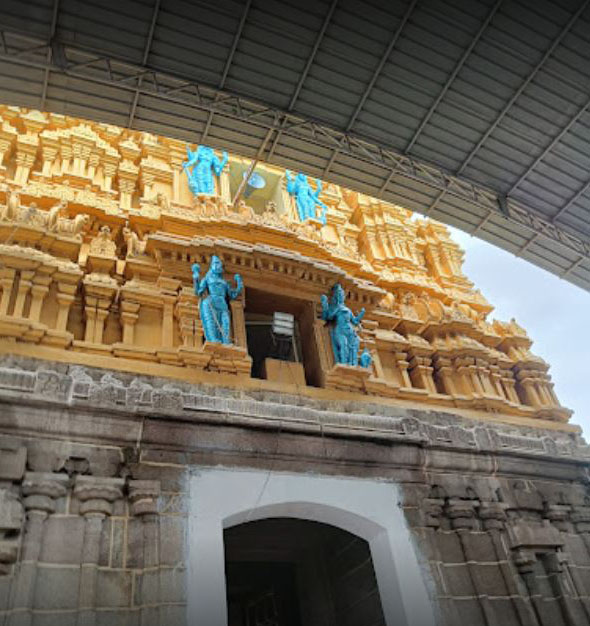
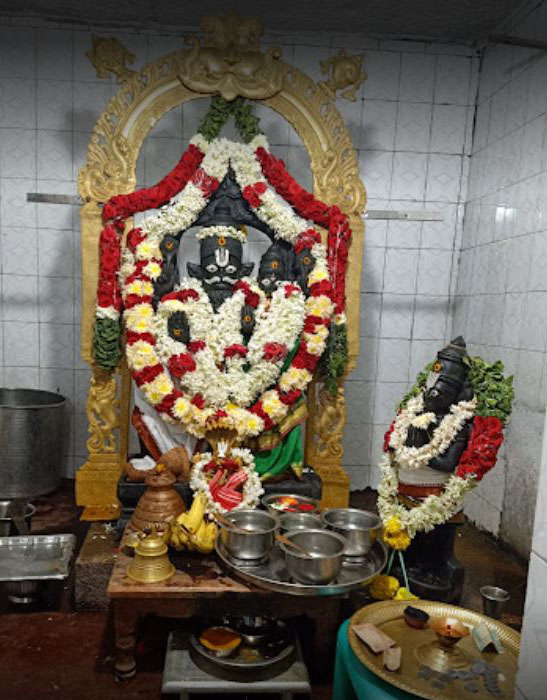
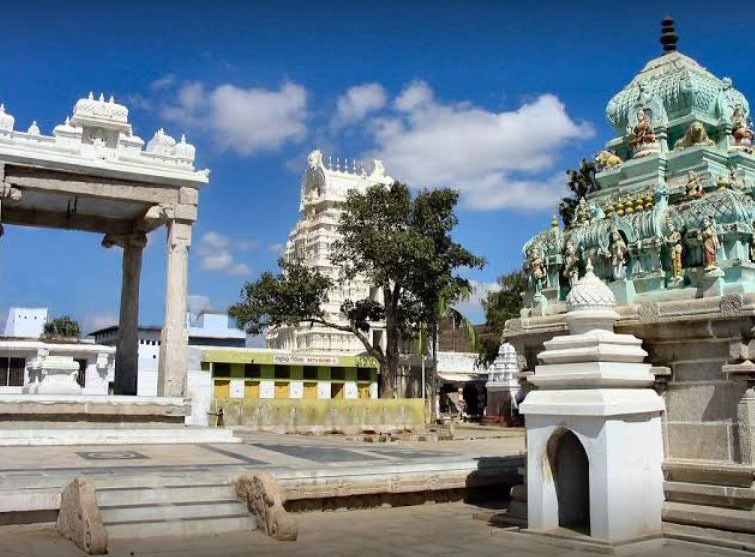
The temple is enclosed in large walled compound with 4 entrances having a gopura over each entrance. On the eastern entrance one can see the idol of Anjaneya. Garbgriha is decorated beautifully with four lions in corner. There is an idol of Prahalada standing beside the lord. Sri Mahalakshmi, the Lords consort is known here by the name of Sri Amruthavalli.
The procession image of the deity is in the form of Vishnu made of metal with Bhudevi and Sridevi on either side. The temple is facing east; with a large pushkarini (temple tank) in the north east corner of the temple.
Inside the temple, every wall is covered with beautiful and delicate carvings of gods and puranic scenes.
Annual chariot festival or Rathothsavam is conducted every year in this temple in grand manner. On this holy day a huge Chariot with Lord Lakshmi Narasimha presiding in it is pulled by hundreds of devotees on the streets. Lakhs of devotees attend this Rathothsavam to participate in the festival.
The legend of Kadiri is mentioned in BRAHMANDA PURANA. It is also said that Veda Vyasa established gurukul in this region to stay away from the demons attack.
Arjuna did penance here on the banks of Maddileru ( Arjuna river), and this river connects holy tanks, Swetha Pushkarini, Brughu Theertham, Sesha Theertham, Kunthi Theertham, Lakshmi Theertham, Ganga Theertham, Garuda Theertham, Bhavanasini Theertham along its path.
Kadiri Lakshmi Narasimha Swamy Temple History
It is known from the inscriptions on the Temple walls, that Swamy appeared in the dream of Veera Bukka Rayalu of Vijayanagar dynasty and revealed his whereabouts. King along with his staff then recovered the Idol (Saligramam) from the roots of the tree and built the temple.
| Phase | Construction Details |
| First Phase | Bukka Raya I completed Gopuram Construction in 1353 AD |
| Second Phase | Harihara Raya made additions during 1356 – 1418 AD |
| Third Phase | Sri Krishna Devaraya renovated in 1509 – 1529 AD |
As time passes, the Idol disappeared from the temple, Lord Narasimha Swamy appeared in the dreams of Achyutha Devarayulu and revealed his whereabouts. King brought the idol from Sthothadhri hill caves and installed in the temple.
Cholas, during 985 – 1076 A.D built the temple for Durga Devi Temple and sculptured idols on the rocks. In the year 1953, Lakshmi idol was installed in the place of Durga Devi, still, we can see Dura Devi main idol inside Durga Devi temple.
Kadiri Lakshmi Narasimha Swamy Temple Construction
Lord Maha Vishnu took the form of Narasimha Swamy to kill the Hiranya Kasyapa. Even after killing the demon, he started roaming around forests and hills with anger. At Sthothadhri hill which is near to Kadiri Town, Devas along with Prahaladha prayed to calm down Narasimha Swamy. Narasimha Swamy pleased with the prayers and withdraw the anger at this place. Hence Narasimha Swamy Temple here is called as Prahalada Sametha Narasimha Swamy Temple.
‘Ka’ means Vishnu Padam (Footprint), ‘Aadri’ means Hill so the place got the name as ‘Kadri’ later turned into ‘Kadiri’. Belief is that Narasimha Swamy stayed at the roots of Chanda Vruksha (Kadiri Vruksham or Canary Tree or Indian Mulberry – Tree) for a very long time.
Interesting fact associated with this temple is, Sweat comes out of the Idol after Abhishekam.
Vasantha Vallabha Utasva murthi (processional deities) which are there in the temple, were recovered from Brughu Theertham ( water tank), as instructed by the Lord in the dream. These Idols were installed during Vasantha Ruthuvu so this utsava murthi (processional deities) were called by Vasantha Vallabhulu. It is believed that these idols were presented by Lord Narasimha Swamy to Bhrugu Maharshi (Sage) to perform Archana.
In the year 391, Narasimha Dasari and Lakshmana Dasari set the long pillars within the temple compound for lighting Lamps. In the year 1509, Sri Krishna Devaraya built the corridor (Ranga Mantap) with Lion faces and Alwar Shrine. In 1545, Achyutha Devaraya built the East Raja Gopuram (Temple Tower), Temple for Lord Vinayaka, Temple for Lord Krishna and Raghavendra Brundhavan ( park). In the year 1569, Sri Thirumala Raya built the corridors and Pushkarini ( Temple Tank). During the period 1642 – 1644, Chathrapathi Sivaji built the Temple for Mahisasura Mardini.
East, West and South Raja Gopuram (Temple towers) were built during the period of Vijayanagar dynasty. As said in the inscriptions, that Kopanna who worked for Kempanna Odayar while building Sri Rangam Temple donated gold ornaments.
In the years 1451 and 1529, Chief for Tadipatri Region built the Veyyi Kalla Mantap ( 1000 pillar mandapam) and Kotai Mantap.
Irrespective of the religion, people celebrate the temple festivals. Devotees from Tamil Nadu, Karnataka used to this temple regularly.
Lord Narasimha in this temple is swayambhu emerging from the roots of Khadri tree (Indian mulberry). The specialty of this temple is that after the daily Abhishekam is performed, the idol of Lord Lakshmi Narasimha oozes sweat continuously even after repeatedly wiping off sweat by the temple priests.
The construction of this temple is said to have been commenced during the Western Chalukya rule but it was completed during the time of Vijayanagara rulers. The inscriptions in the temple relate mostly to the Vijayanagar period. One of them states that the temple was built by a Nayaka during the reign of Bukka I in 1332 AD. The raja gopuram was built by Harihararaya.
The popular king of Vijayanagara Sri Krishna Devaraya and Maharashtra King Shivaji visited this famous temple and constructed sub temples and Mahishasuramardini Temple respectively.
The temple is enclosed in large walled compound with 4 entrances having a gopura over each entrance. On the eastern entrance one can see the idol of Anjaneya. Garbgriha is decorated beautifully with four lions in corner. There is an idol of Prahalada standing beside the lord. Sri Mahalakshmi, the Lords consort is known here by the name of Sri Amruthavalli.
The procession image of the deity is in the form of Vishnu made of metal with Bhudevi and Sridevi on either side. The temple is facing east; with a large pushkarini (temple tank) in the north east corner of the temple.
Inside the temple, every wall is covered with beautiful and delicate carvings of gods and puranic scenes.
Meera Subramanian says,
The temple architecture and spiritual energy are amazing. Felt deeply connected.
Lakshmi Narayan says,
Every visit brings inner peace and strength. Jai Shri Ram ????
Suresh Kumar says,
The divine presence here is very powerful. A truly holy Swayambhu temple
Kavya Nair says,
Such a serene and spiritually uplifting temple. Felt calm and blessed.
Arjun Patel says,
A sacred place filled with devotion and history. Highly recommend visiting with family
Ananya Reddy says,
Blessed to have darshan here. The vibrations and positivity are beyond words.
Priya Iyer says,
An unforgettable spiritual experience. The atmosphere is so pure and peaceful.
Rahul Sharma says,
Felt divine energy as soon as I entered the temple. Truly a powerful Swayambhu kshetra. ????
6.30 AM - 12.30 PM and 4.30 PM - 8.30 PM
Kadiri Lakshmi Narasimha Swamy Temple
Address: Kadiri, Ananthapuram, And
Explore spiritual insights, reviews, and divine writings shared by our esteemed Priests & Guides.
Sri Ramananda shares the importance of morning poojas for spiritual awakening.

Guru Venkatesh explains how daily mantra chanting transforms mental and spiritual well-being.





Leave a Comment